Micro Four Thirds vs. Full Frame: Thoughts and Direct Image Comparisons
As you might have seen from my articles, I recently acquired a second camera system—Micro Four Thirds. And honestly, using it brings me a lot of thrill! Great colors, camera convenience—I had all that with the Panasonic S1R too, but here there are "magical" lenses that simply don't and can't exist for FF, and using them brings immense pleasure. To be honest, my current situation, which threatens to turn into a full switch to the "micro" system, started precisely with the lenses. I already wrote that initially I traded my seldom-used Canon 70-200 telephoto for an Olympus 12-100mm f/4. And that's how it began... Then, as I wrote here, I tried in practice and realized that the Panasonic 100-300mm II allows me to shoot what I shot with the huge Sigma 100-400mm no worse, but much more conveniently. Then I tried the Olympus 45mm f/1.2 and was enchanted by this lens! Working with it was far more enjoyable than with its full-frame analogue, the Panasonic 85mm f/1.8! Simultaneously, my Panasonic S 24-105mm f/4... fell victim to a defect typical for this lens—whether it got fungus or, more likely, delamination of a hybrid aspherical element. Either way, the expensive FF lens gave up the ghost, and I was forced to sell it for peanuts "as is." Having lost my primary standard zoom for the FF camera, I started taking the MFT camera with the 12-100mm almost everywhere. And, to my surprise, I realized that on downsized images, there's practically no visible difference anymore, even though there was one on earlier MFT cameras! Lenses Frankly, I'm currently tempted to switch to MFT completely, selling the FF camera and remaining lenses, and using the proceeds to buy a couple of excellent Pro lenses for MFT. But I don't want to rush... Having both systems gives me the practical opportunity to understand what I'll lose and what I'll gain, and I should use that. I've used digital cameras since 2003, so I really do understand the differences between formats and the limitations of each. But understanding the strengths of each system is one thing; achieving a balance between them, comfort, and financial possibilities is another. In fact, my first DSLR cameras (after transitioning from compacts and so-called "bridge" cameras) were from the Olympus 4/3 E system... I started my journey with this small sensor... I left when the E system was discontinued, as I don't like using small cameras. I prefer cameras with a good grip because I enjoy using quality zoom lenses, which are larger and heavier than primes. I value versatility and feel very limited with prime lenses, which I only use when there's no other option (e.g., an ultra-fast portrait lens and a macro lens). During my photographic journey, I've used Olympus (4/3), Sony (SLT, Mirrorless, APS-C, FF), Nikon (APS-C DSLR and Mirrorless), Fuji (APS-C), and now—Panasonic FF and, recently—Panasonic MFT. There have been times when I thought, "Okay, I'll stay with this system," but then either the system was discontinued by the manufacturer (Olympus E system, Sony SLT), or I realized I'd made a mistake and wasn't enjoying using my camera (Sony Mirrorless FF, Fuji), or I saw something that SEEMED like a better option for me, and my thirst for adventure and new things made me switch systems... And yes, there was a moment when my adventurousness led me to a mistake. I switched from Nikon to Fuji and, after more than 6 months, realized I'd made a huge mistake when I delved deeper into processing images from the X-Trans sensor and discovered the reason for the strange loss of detail and colors on Fuji X-Trans cameras... Currently... Yes, it's another adventure... I understand there's no necessity for this, but photography is my hobby, it should bring pleasure, so why not? I've returned to where I started—the 4/3 format, looked at the range of available lenses, and found several that captivated me. High-quality, extremely versatile, and light lenses—this looks like heaven to me! But this time I'm being cautious and want to study everything before making decisions. So I'm trying to understand if MFT has limitations that could negatively affect my photographic interests. So far, most of MFT's limitations seem quite acceptable to me... The limitation on minimum depth of field (which I described here) is perfectly acceptable for me. What the Olympus 45mm f/1.2 allows is quite sufficient for me. The autofocus on the Panasonic G9 is excellent; it certainly doesn't limit me. Resolution... Yes, only 20 Megapixels, but what I feared and what WAS present on the GX8 isn't there on the G9—in landscapes, distant leaves don't turn into mush but look excellent—no worse than on frames from the S1R! I'm talking about downsized final images, of course. Yes, S1R frames can be heavily cropped, compensating for insufficient focal length on a lens—for example, I cropped seagull shots heavily since 24-105mm is too short for such shots. But on MFT, the lenses I've chosen are expansive, and instead of cropping in post, they allow for zooming while shooting! Two questions remain—noise and dynamic range. Both are perfectly tested at night, and I took both cameras for a walk around my condominium courtyard to take some test shots. Let's talk about them and what they told me. I took 12 comparative shots. They are more or less similar. Not exactly, as I just walked around the yard and shot handheld with both cameras. But they give a good idea of the difference between the two cameras—Panasonic Lumix S1R and G9. These cameras are very close both in age and ergonomics; they are practically identical in features, controls, menus, but have different sensors. S1R settings: Panasonic 20-60mm f/3.5-5.6 @24mm f/4, IBIS on, Auto ISO, max ISO 6400, minimum shutter speed 1/30. G9 settings: Olympus 12-100mm f/4, @12mm f/4, lens stabilization, iAUTO ISO, max ISO 6400, minimum shutter speed 1/30. Note: The S1R doesn't have an iAuto ISO mode. I wanted the test to most closely match my shooting style, so I set the G9 to iAuto ISO, which works MUCH smarter than simple Auto. This gave the G9 some advantage, as it tried to keep ISO to a minimum. Interestingly, the colors from these two cameras are quite different. The G9 tends towards warmer tones, while the S1R works with cooler shades and has a somewhat yellowish cast compared to the G9. Images were processed in DxO using the same preset, so color differences are due to the cameras, not post-processing. Processing included some techniques that SIGNIFICANTLY increase noise (DxO ClearView, shadow lifting), but shots from both cameras were quality-processed with the Deep Prime XD algorithm for noise reduction. So, let's look at the image pairs. All images can be opened to Full HD on my site. Panasonic S1R Image: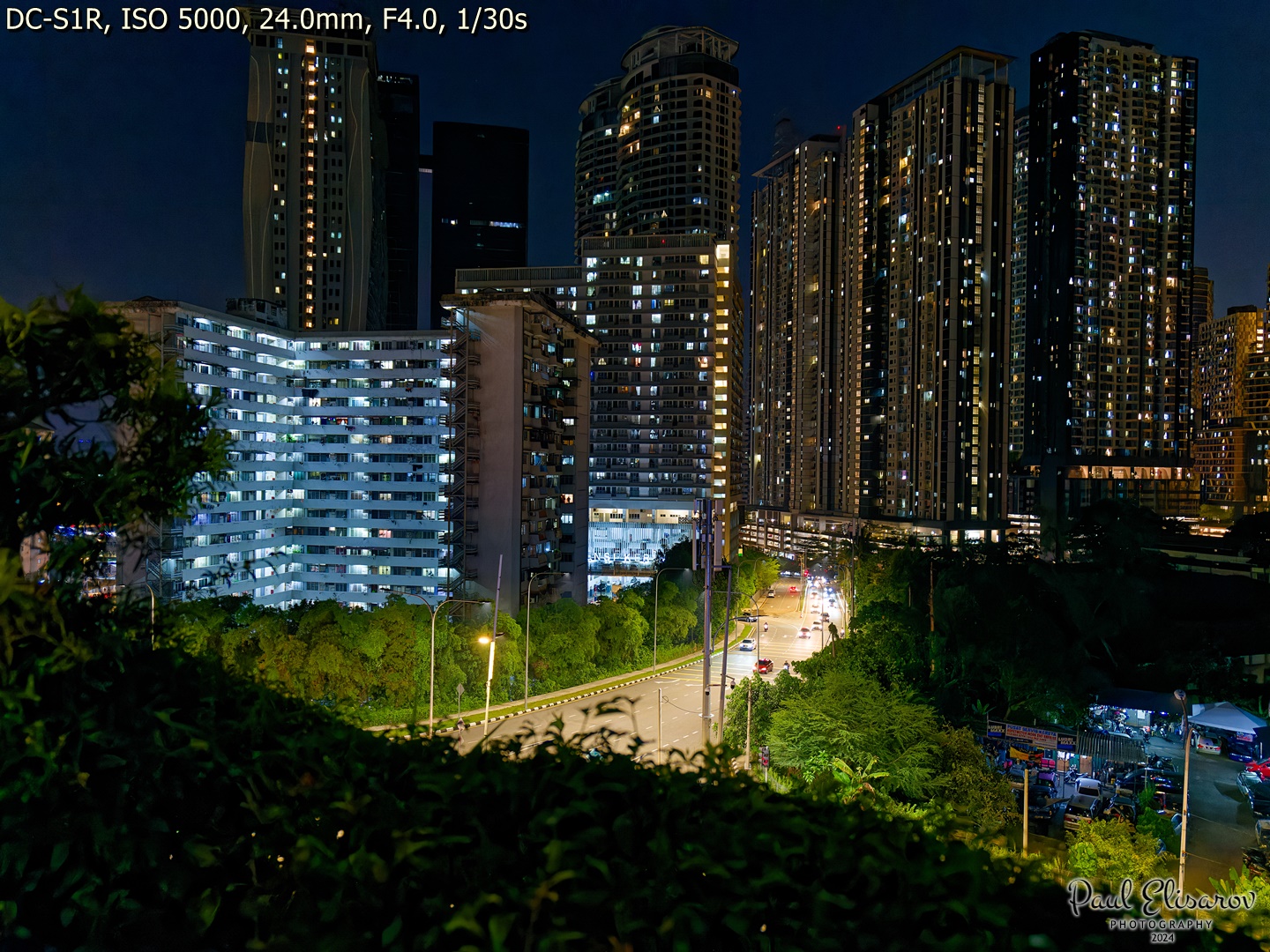 Panasonic G9 Image:
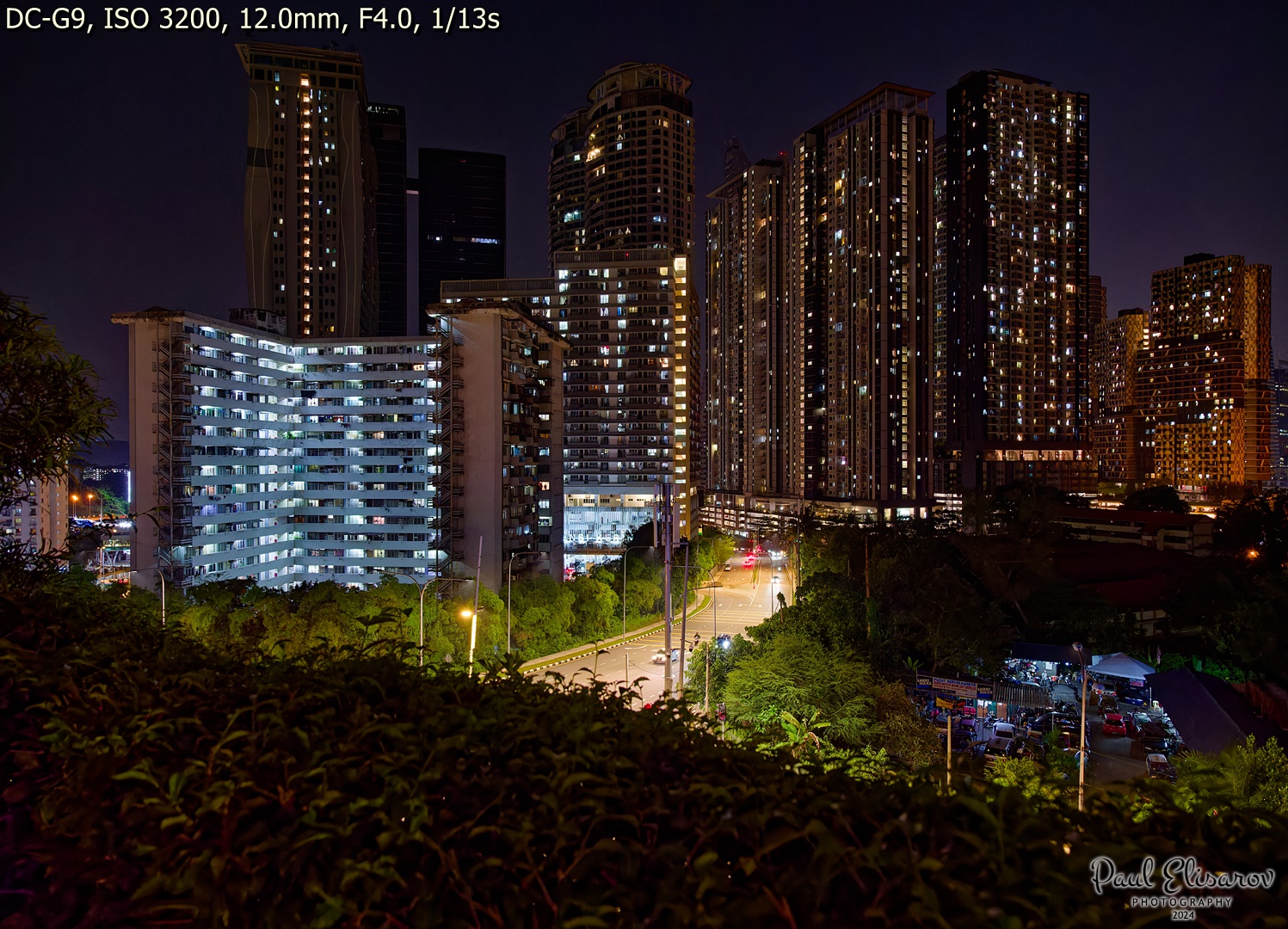 Here the difference in color reproduction is very clear. This difference at lower ISOs can be corrected in development, but at high ISOs, if you want to, say, reduce the red channel on the G9, which makes the sky lilac and everything else warmer, it's better to do it in-camera by selecting a different auto white balance (AWBc instead of AWB, which was selected on both cameras). And if you want color rendition like the G9, then on the S1R you need to choose AWBw.
In this case, the S1R used ISO 5000, and the G9 used ISO 3200. Also, note the sky on the left—the S1R has some streaking there, while the G9, strangely, does not.
Panasonic S1R Image:
Here the difference in color reproduction is very clear. This difference at lower ISOs can be corrected in development, but at high ISOs, if you want to, say, reduce the red channel on the G9, which makes the sky lilac and everything else warmer, it's better to do it in-camera by selecting a different auto white balance (AWBc instead of AWB, which was selected on both cameras). And if you want color rendition like the G9, then on the S1R you need to choose AWBw.
In this case, the S1R used ISO 5000, and the G9 used ISO 3200. Also, note the sky on the left—the S1R has some streaking there, while the G9, strangely, does not.
Panasonic S1R Image:
 Panasonic G9 Image:
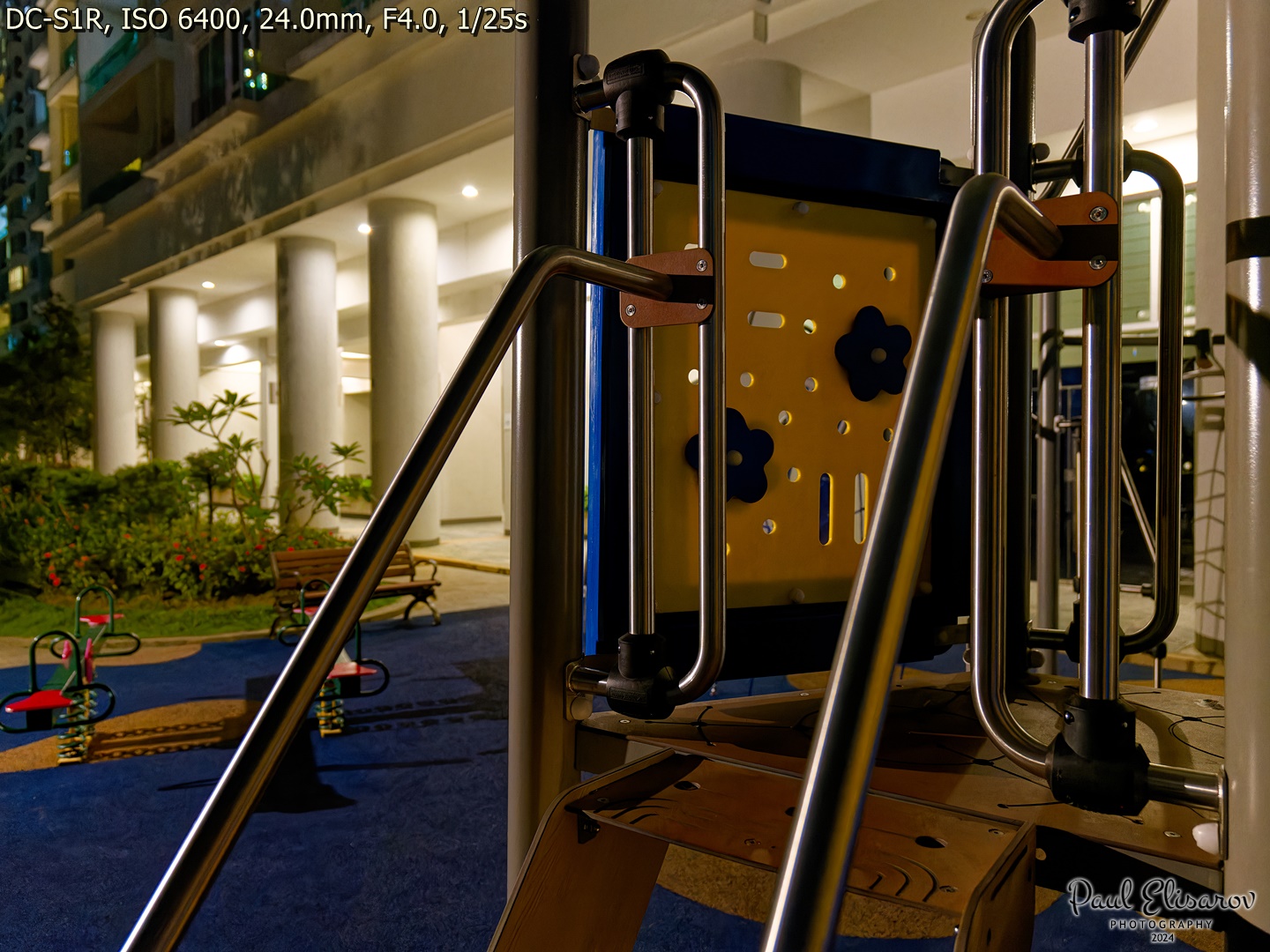
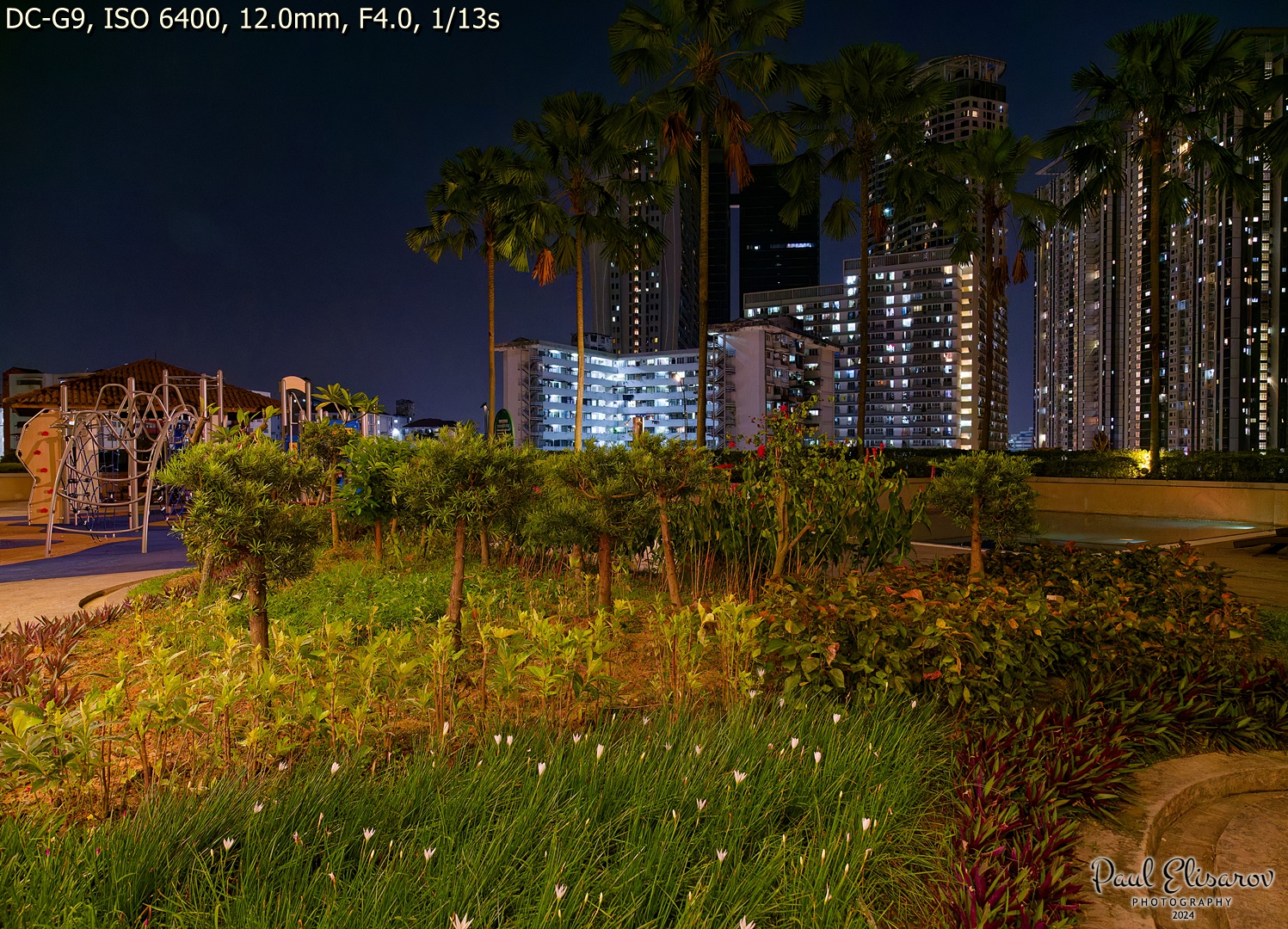
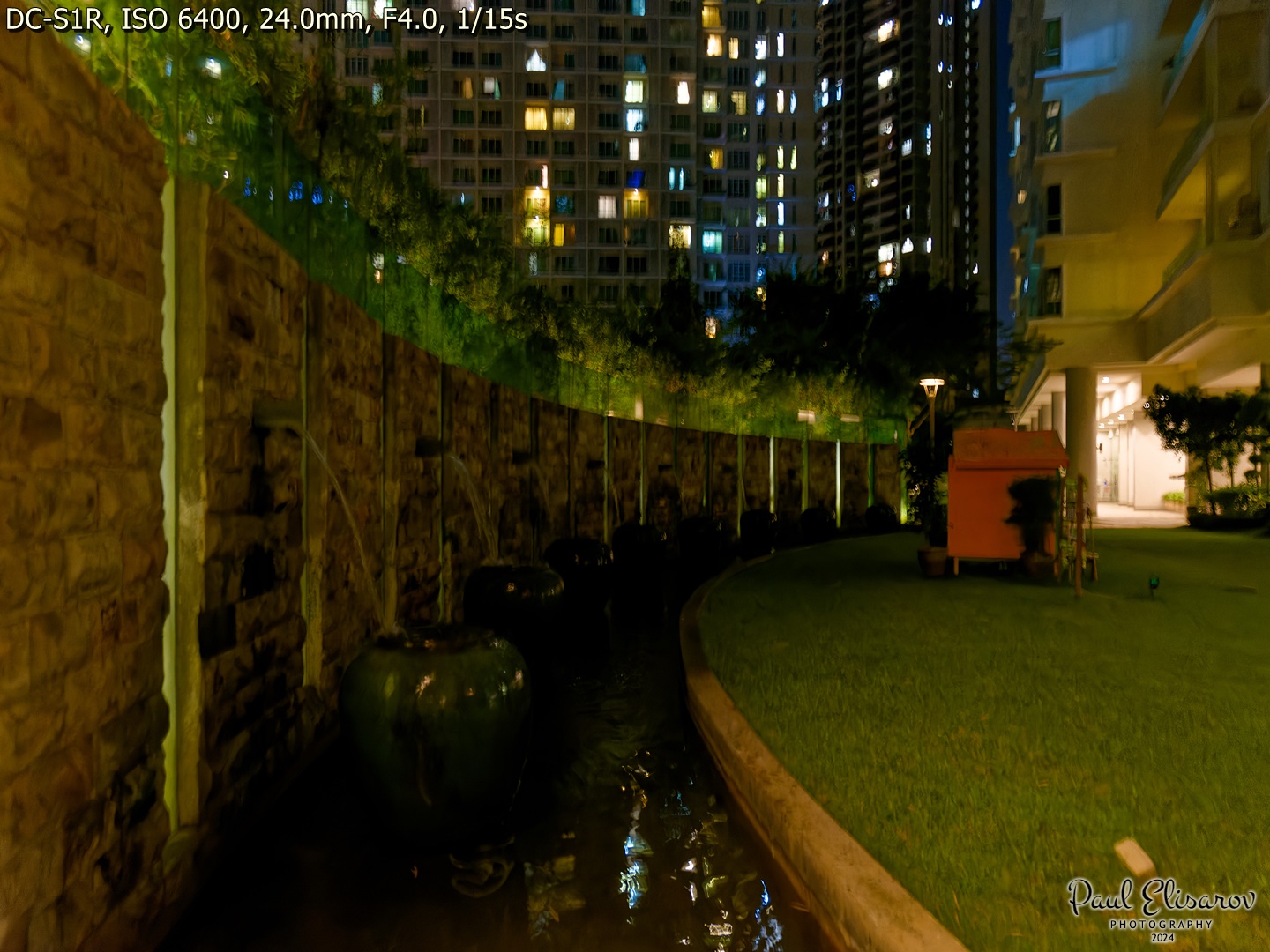
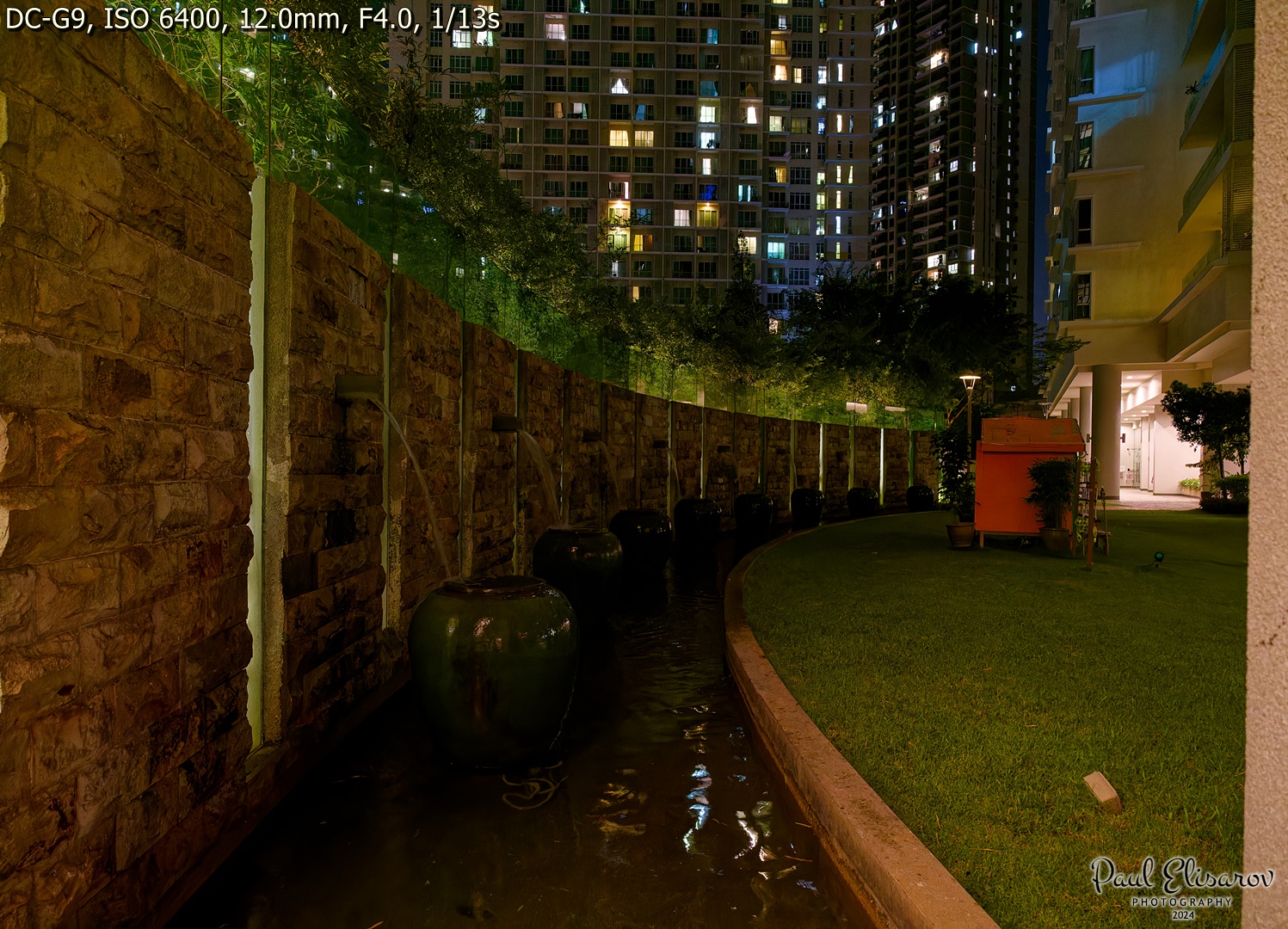
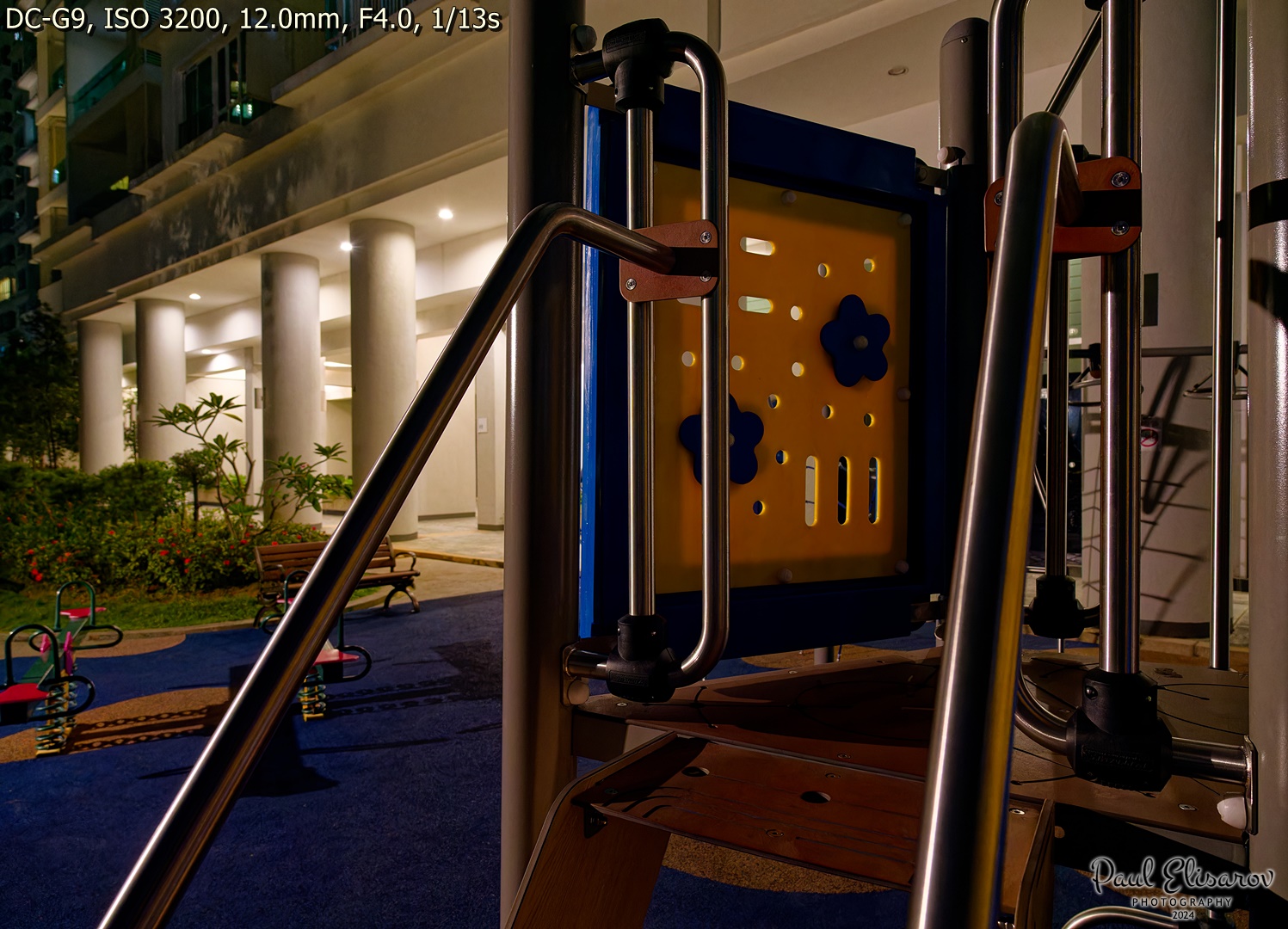 There aren't many differences here. But again, the S1R used a higher ISO, this time by a stop. The G9's iISO reasonably decided that 1/13 second was enough, even though the minimum speed was set to 1/30.
This is also an example of how shallow depth of field is far from always better. In this G9 frame, everything is sharp, while the S1R blurred the columns and greenery, which here is clearly unnecessary. To get everything sharp on FF, you'd need to stop down to f/8, but the camera is already at ISO 6400! There's seemingly no room to stop down further.
Panasonic S1R Image:
There aren't many differences here. But again, the S1R used a higher ISO, this time by a stop. The G9's iISO reasonably decided that 1/13 second was enough, even though the minimum speed was set to 1/30.
This is also an example of how shallow depth of field is far from always better. In this G9 frame, everything is sharp, while the S1R blurred the columns and greenery, which here is clearly unnecessary. To get everything sharp on FF, you'd need to stop down to f/8, but the camera is already at ISO 6400! There's seemingly no room to stop down further.
Panasonic S1R Image:
 Panasonic G9 Image:
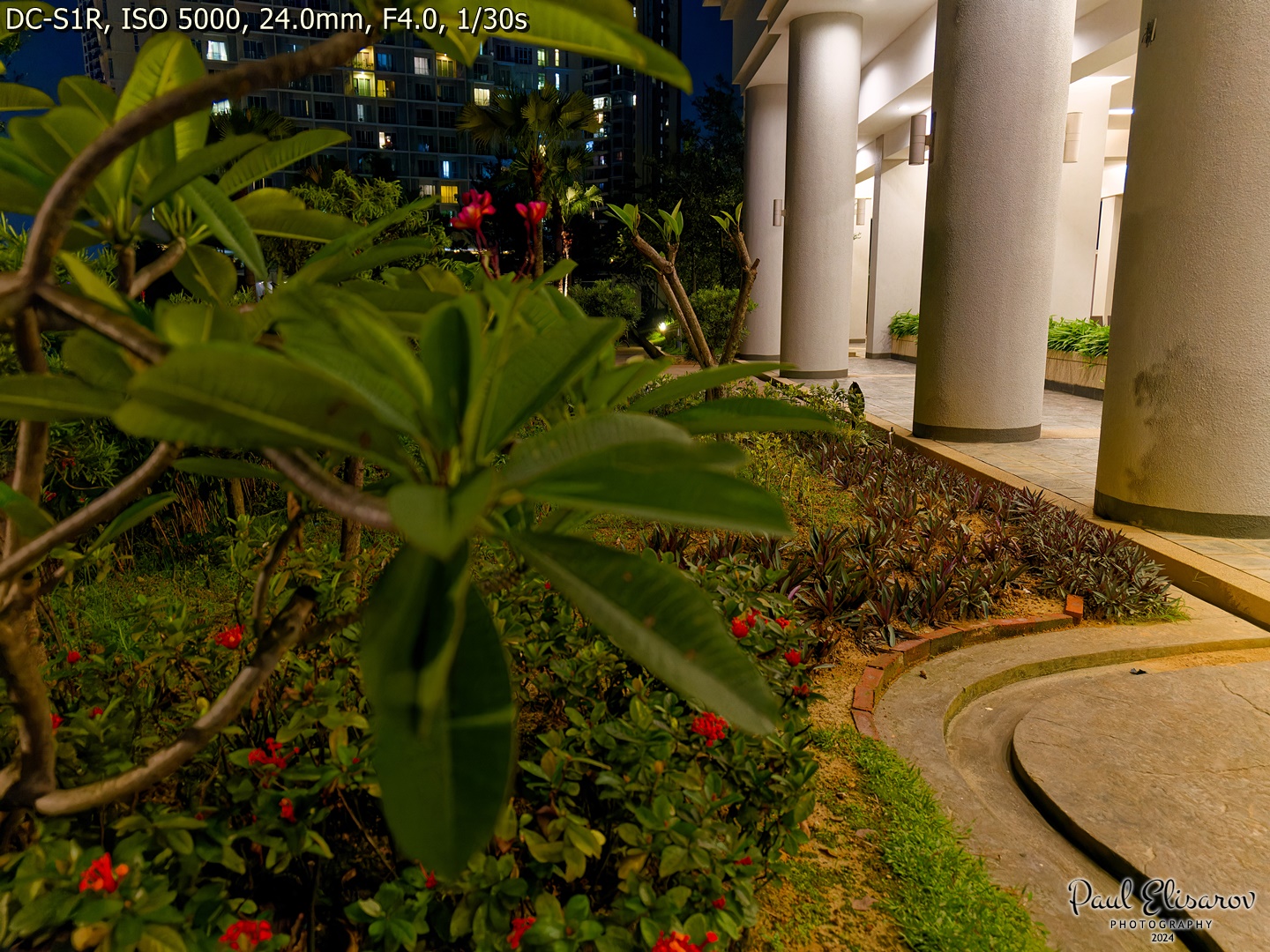
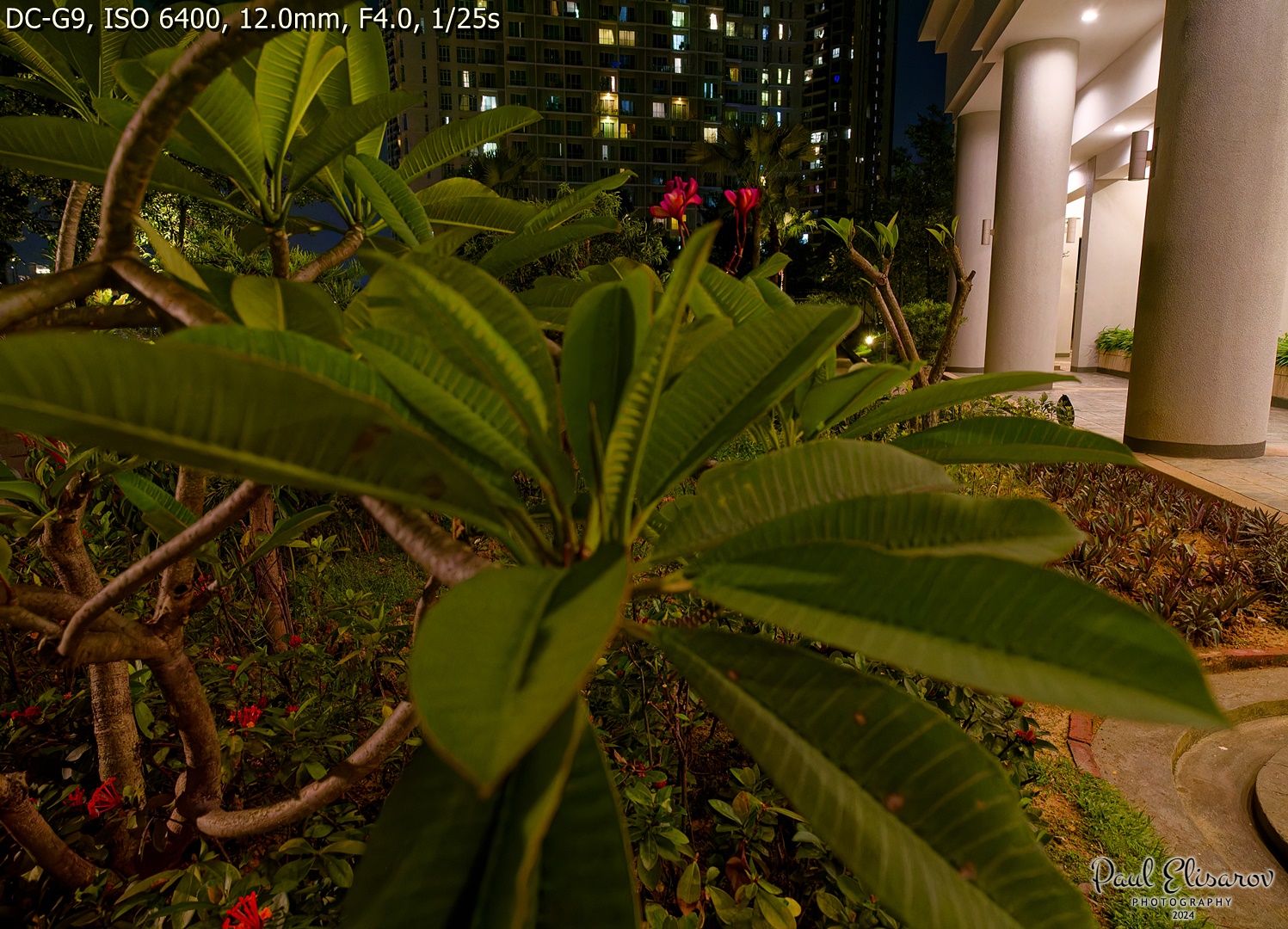 Here the G9 used ISO 6400, and the S1R less—5000. But the frames are very similar.
Panasonic S1R Image:
Here the G9 used ISO 6400, and the S1R less—5000. But the frames are very similar.
Panasonic S1R Image:
 Panasonic G9 Image:
 Not really identical but anyway - bot useable.
Panasonic S1R Image:
Not really identical but anyway - bot useable.
Panasonic S1R Image:
 Panasonic G9 Image:
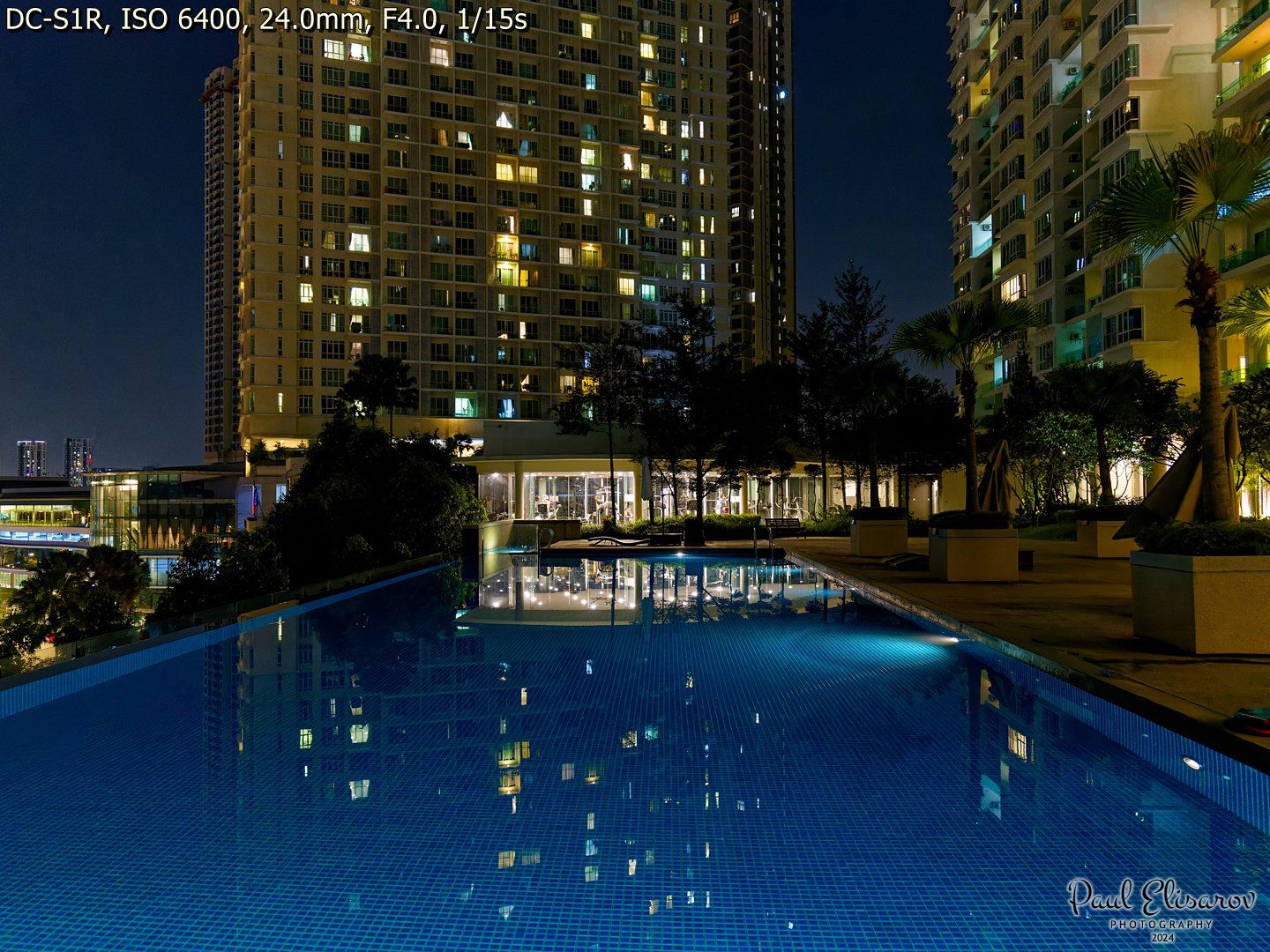
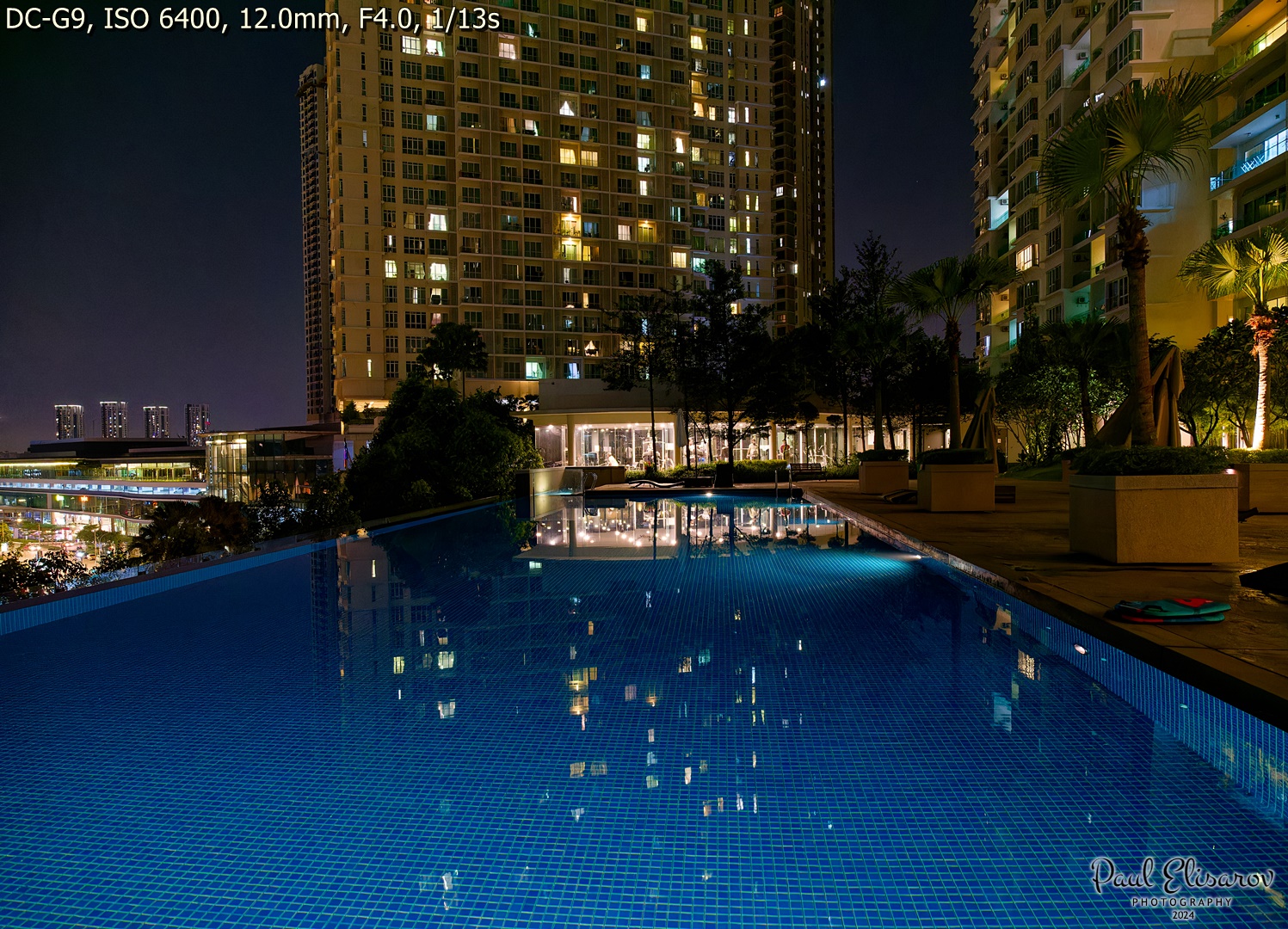 In this case, it's visible that the G9's red channel dominance is quite small; it doesn't affect the saturated blue of the pool, but the sky has again turned lilac. I prefer the S1R's blue sky; I'll introduce a correction on the G9 and use the cool auto WB type for night shooting.
Both frames are at ISO 6400 and both are quite clean—noise isn't intrusive.
Panasonic S1R Image:
In this case, it's visible that the G9's red channel dominance is quite small; it doesn't affect the saturated blue of the pool, but the sky has again turned lilac. I prefer the S1R's blue sky; I'll introduce a correction on the G9 and use the cool auto WB type for night shooting.
Both frames are at ISO 6400 and both are quite clean—noise isn't intrusive.
Panasonic S1R Image:
 Panasonic G9 Image:
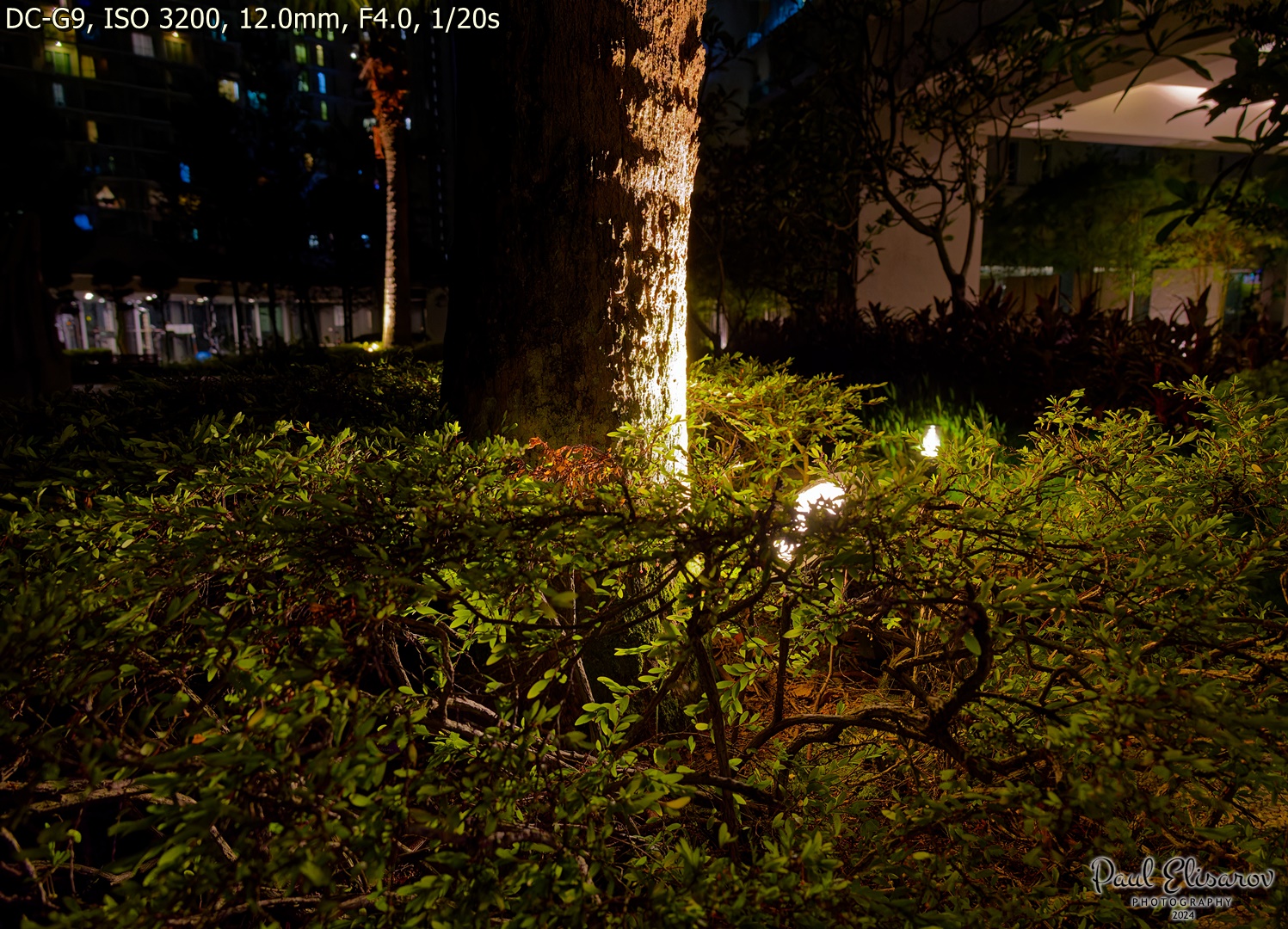 Panasonic S1R Image:
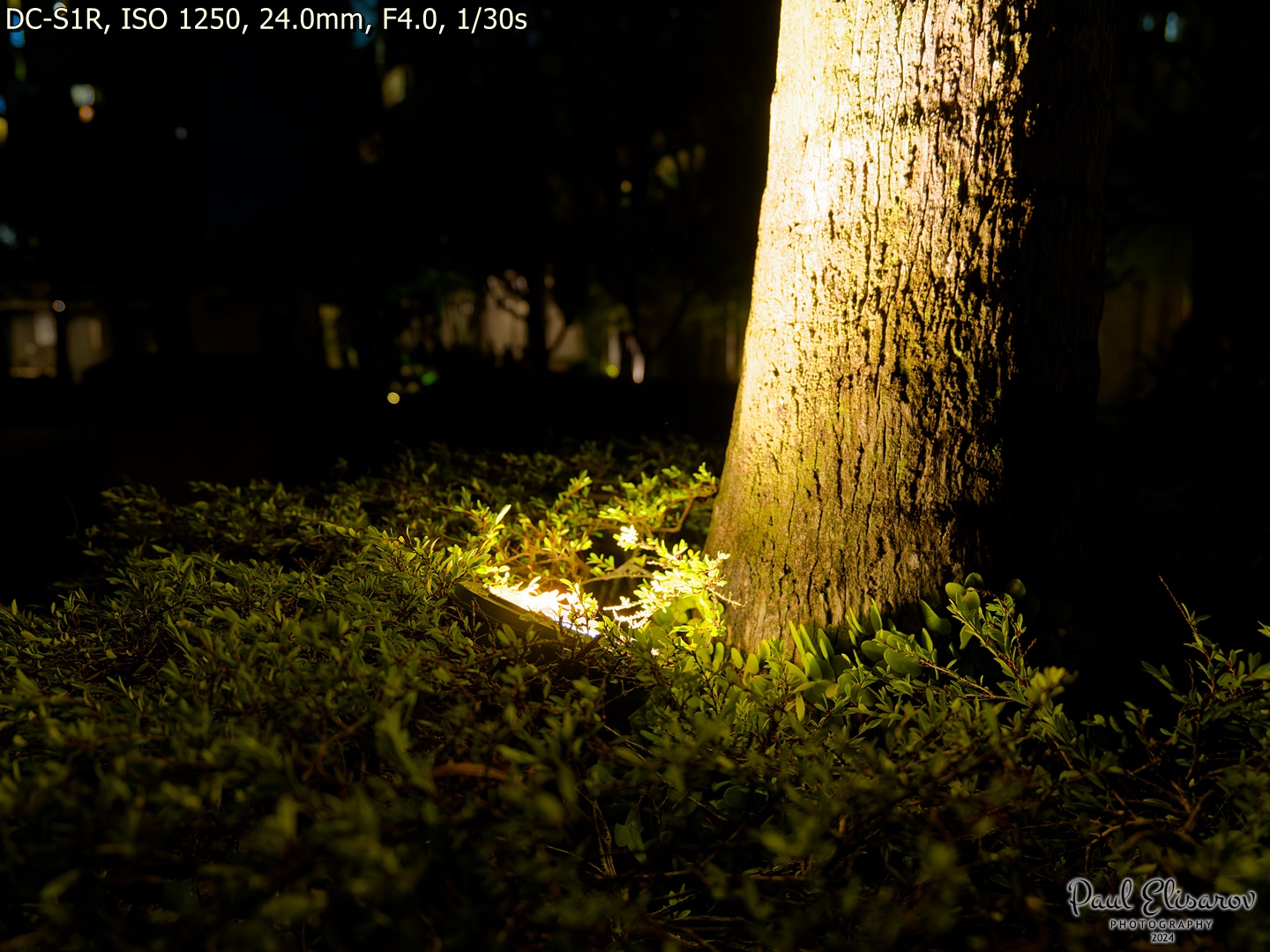 Panasonic G9 Image:
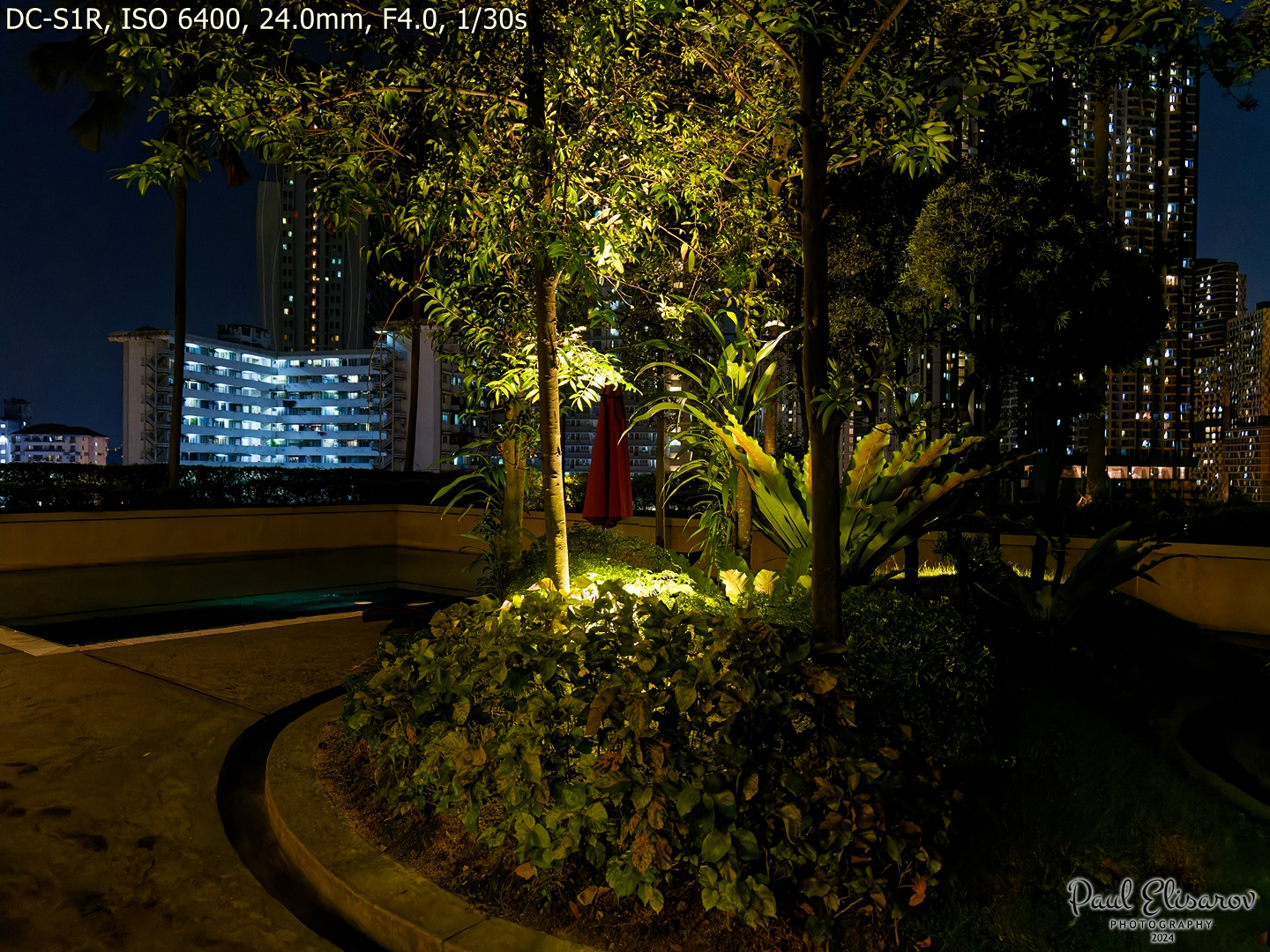
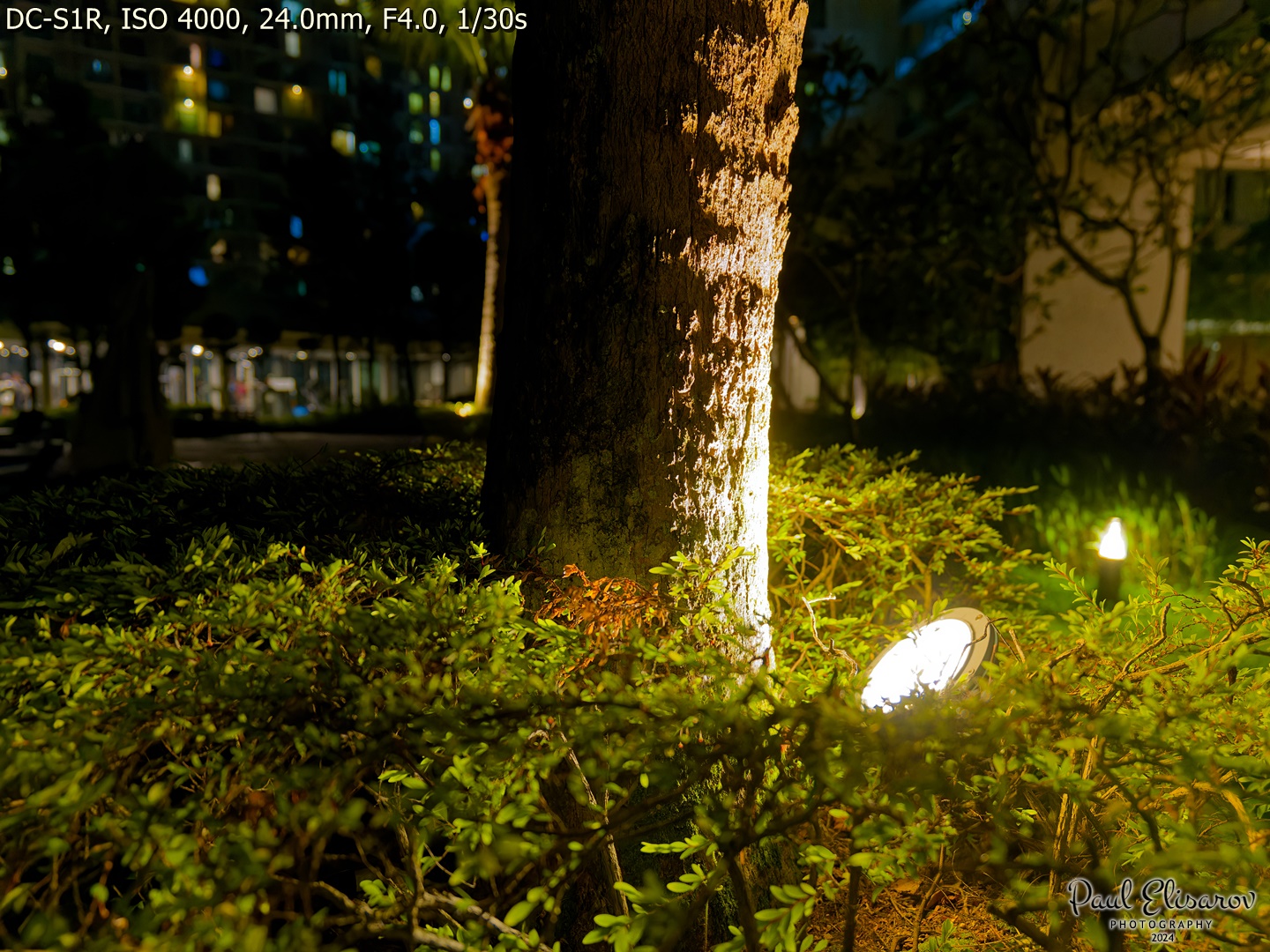
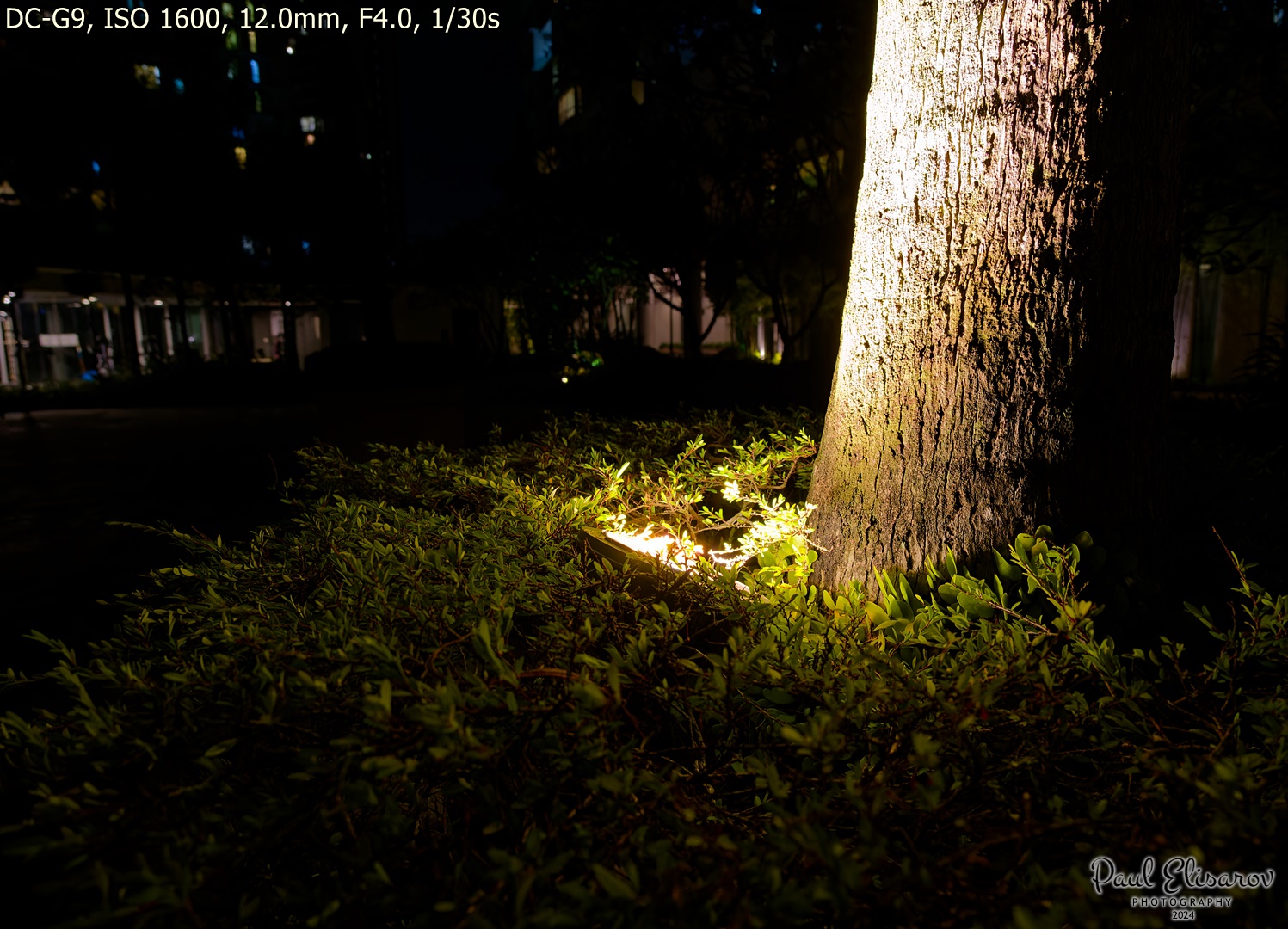 An extremely brightly lit trees. Here, the S1R used ISO 1250, and the G9 used 1600. And here it's clear that the G9 clearly lacked dynamic range in the highlights. These frames had their highlights "recovered," and the S1R has data, nothing is blown to white, while the G9's DR wasn't enough! Of course, this is VERY bright lighting, but it also allows not pushing ISO to 6400, where DR would be even less!
Panasonic S1R Image:
An extremely brightly lit trees. Here, the S1R used ISO 1250, and the G9 used 1600. And here it's clear that the G9 clearly lacked dynamic range in the highlights. These frames had their highlights "recovered," and the S1R has data, nothing is blown to white, while the G9's DR wasn't enough! Of course, this is VERY bright lighting, but it also allows not pushing ISO to 6400, where DR would be even less!
Panasonic S1R Image:
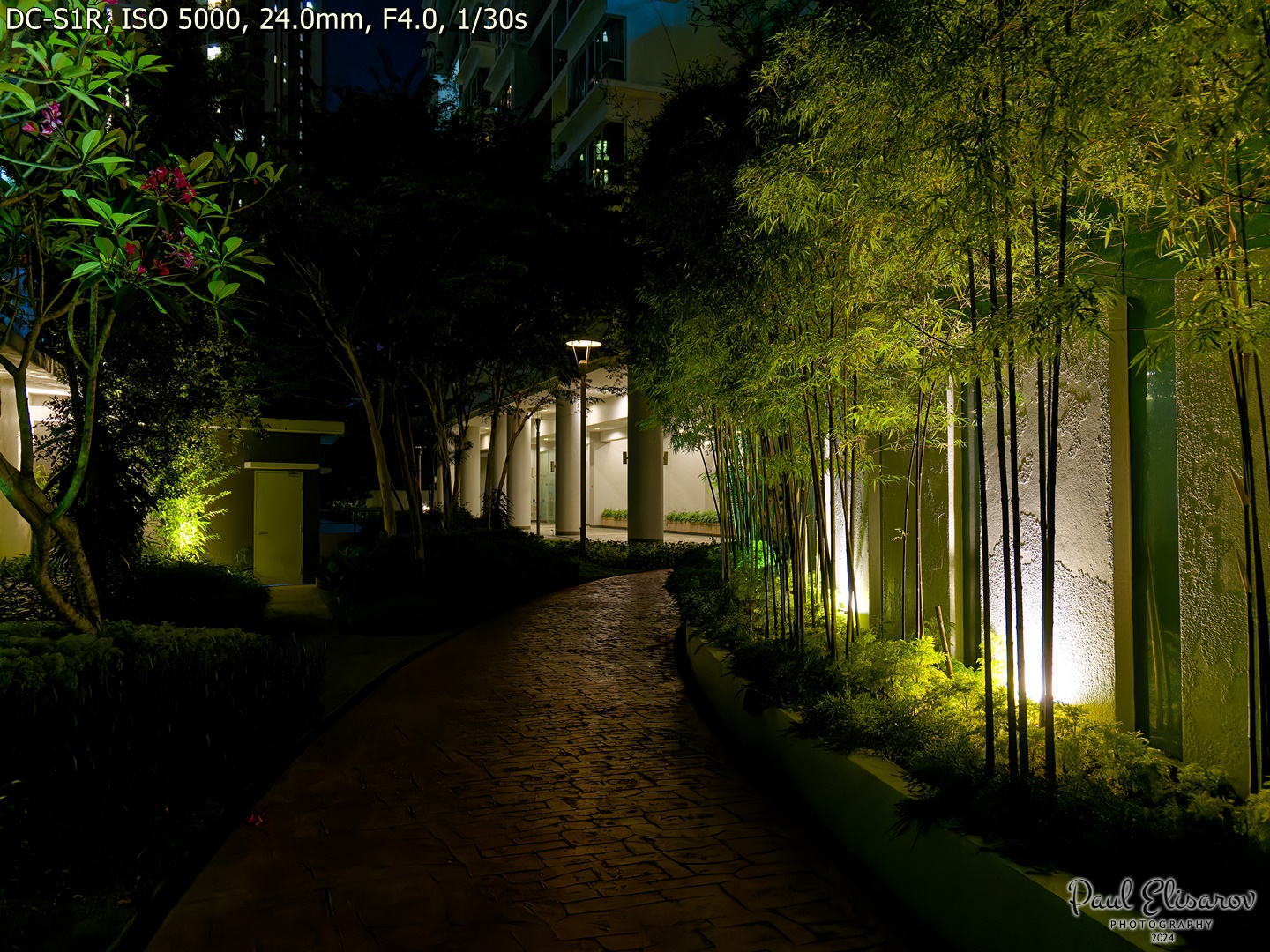 Panasonic G9 Image:
 Again the G9 used a lower ISO. And, this time, I like its color reproduction more—it feels cozier somehow...
At the same time, the walls near the lamps look fine on the G9 (and on the S1R, of course).
Panasonic S1R Image:
Again the G9 used a lower ISO. And, this time, I like its color reproduction more—it feels cozier somehow...
At the same time, the walls near the lamps look fine on the G9 (and on the S1R, of course).
Panasonic S1R Image:
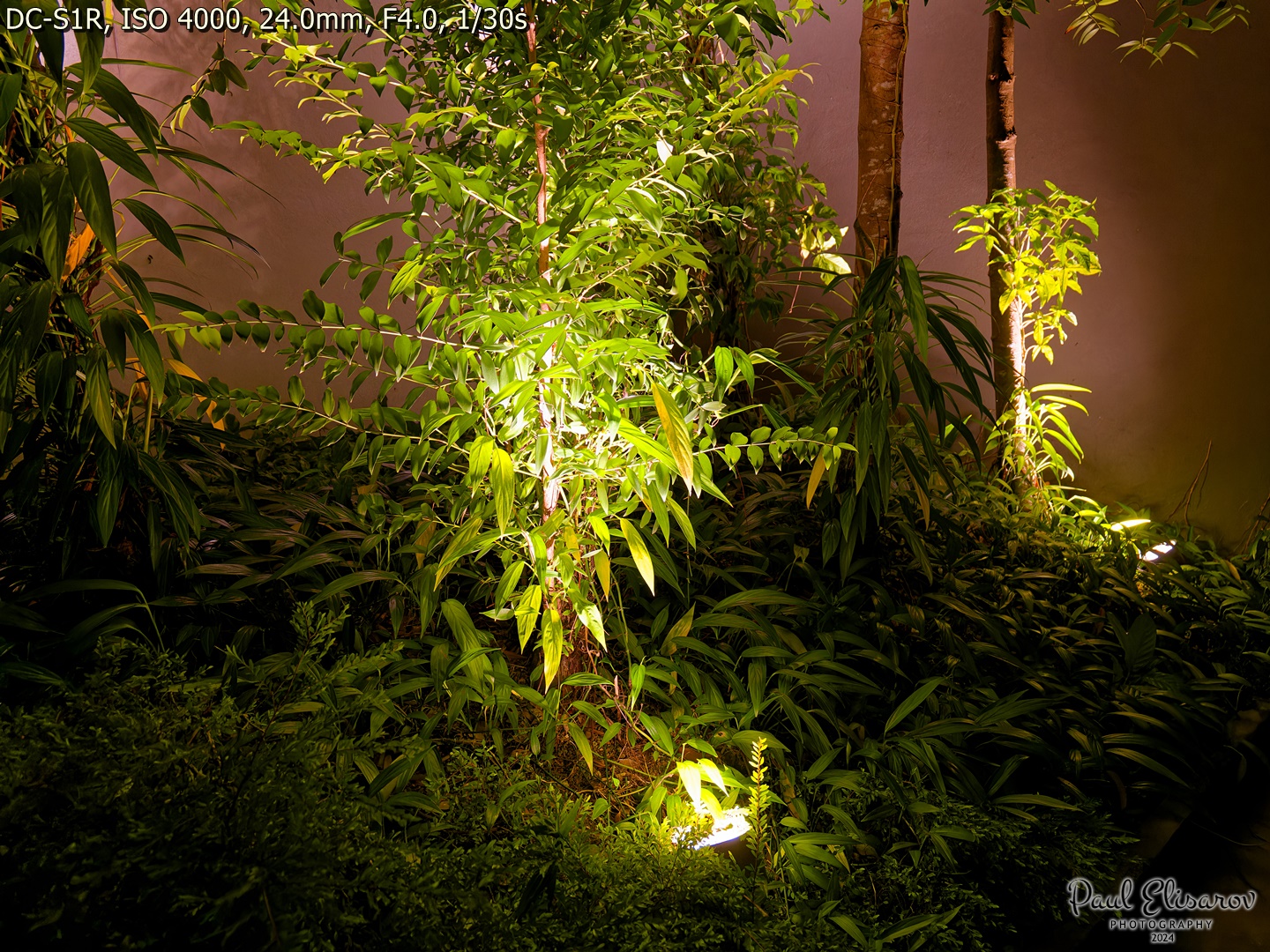 Panasonic G9 Image:
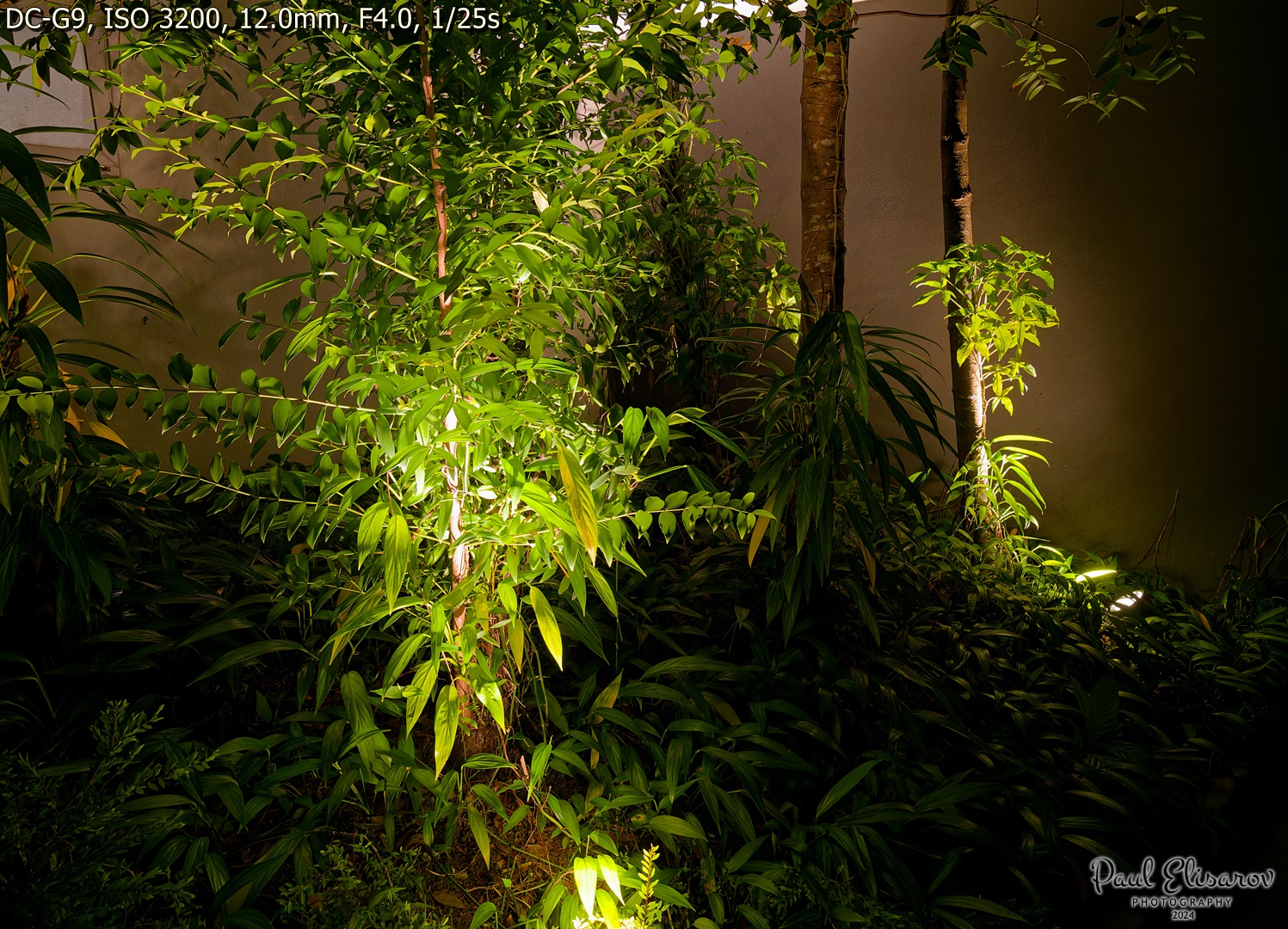 Something strange happened here—the S1R produced a warmer image than the G9. Well, both look excellent.
Panasonic S1R Image:
Something strange happened here—the S1R produced a warmer image than the G9. Well, both look excellent.
Panasonic S1R Image:
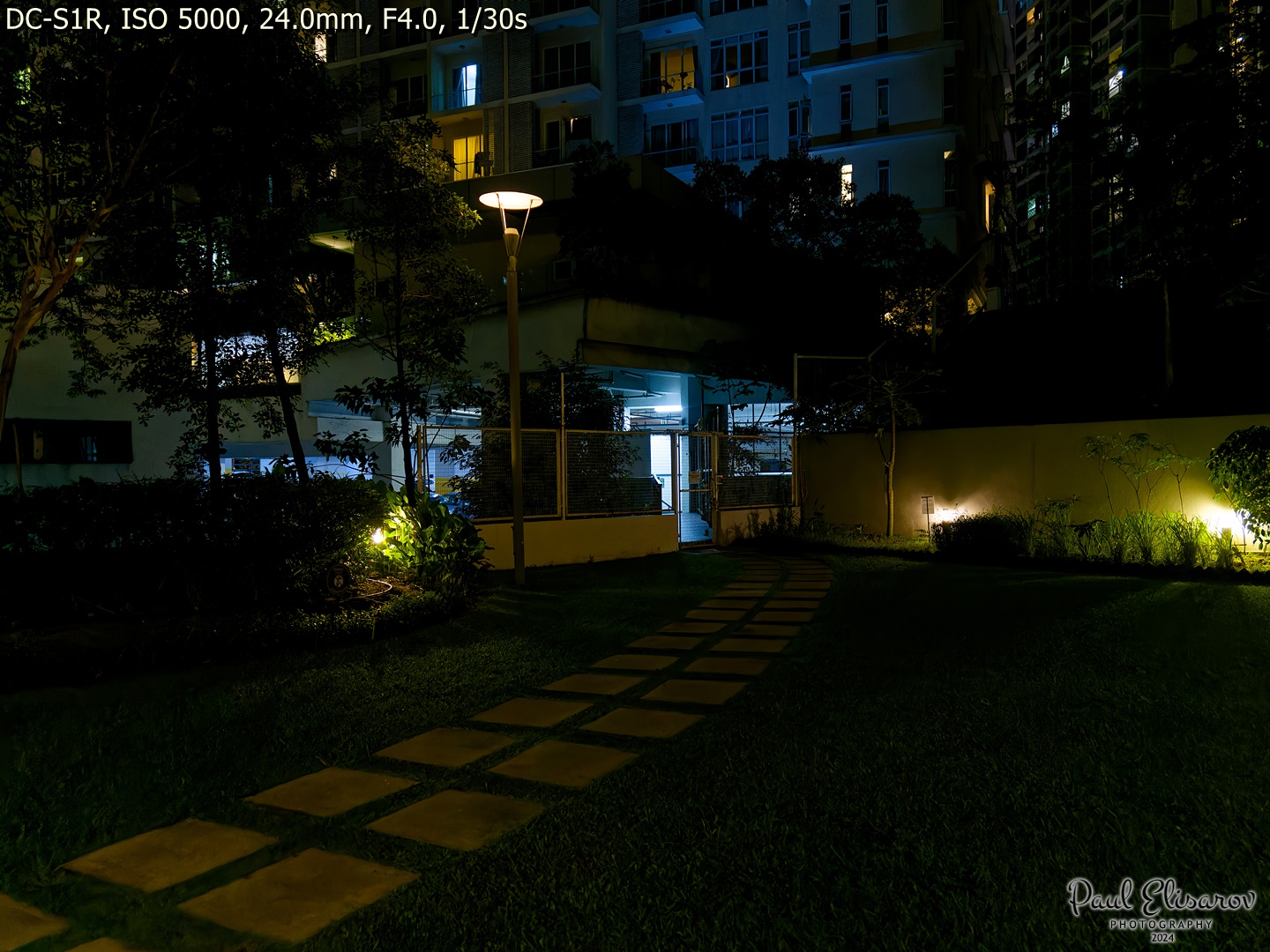 Panasonic G9 Image:
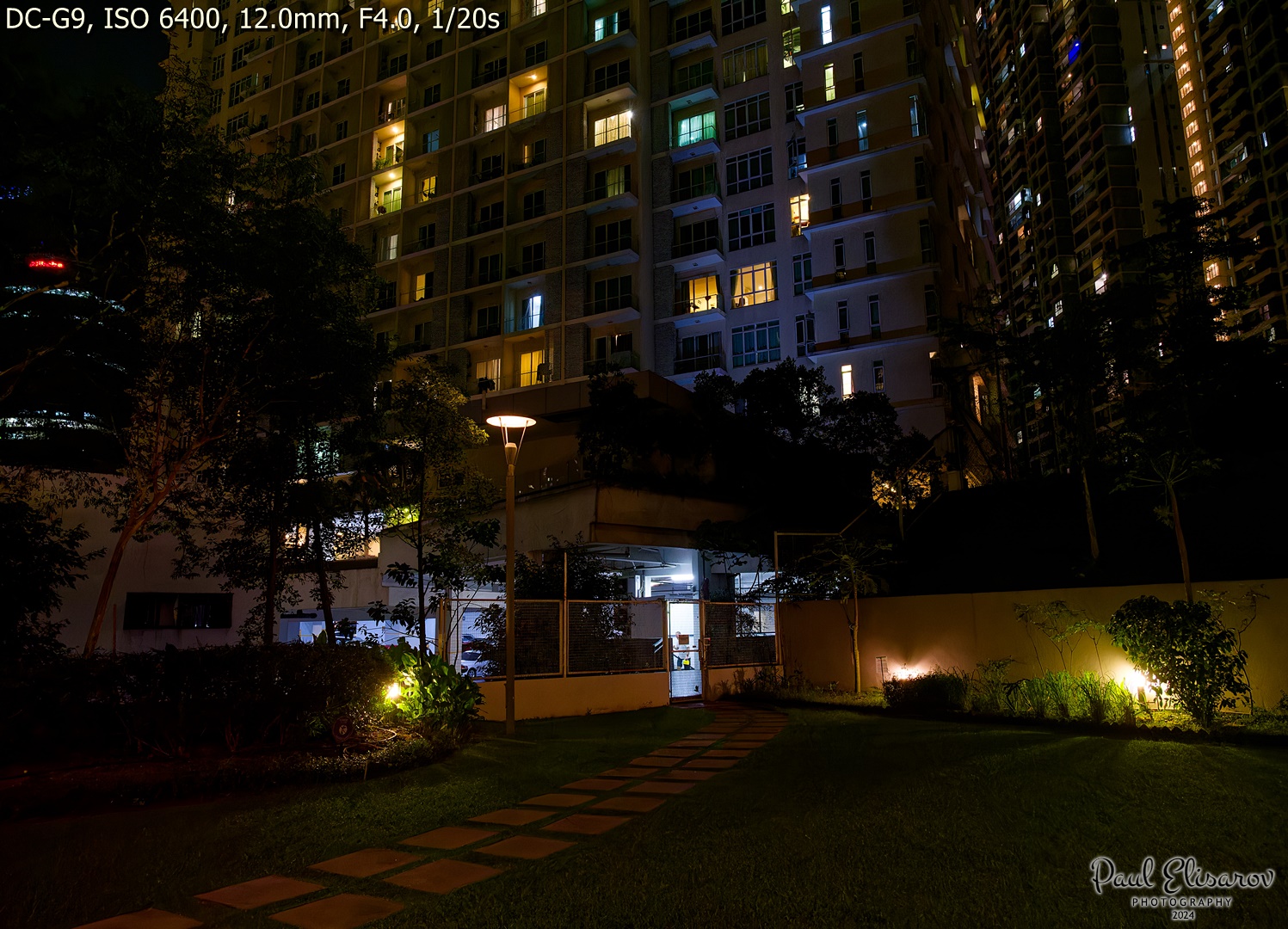 This is the darkest corner of the yard—the back door. Both frames are quite normal, and look at the dark area above the door—the S1R has practically nothing there, while the G9 shows glimpses of the white roof.
Panasonic S1R Image:
This is the darkest corner of the yard—the back door. Both frames are quite normal, and look at the dark area above the door—the S1R has practically nothing there, while the G9 shows glimpses of the white roof.
Panasonic S1R Image:
 Panasonic G9 Image:
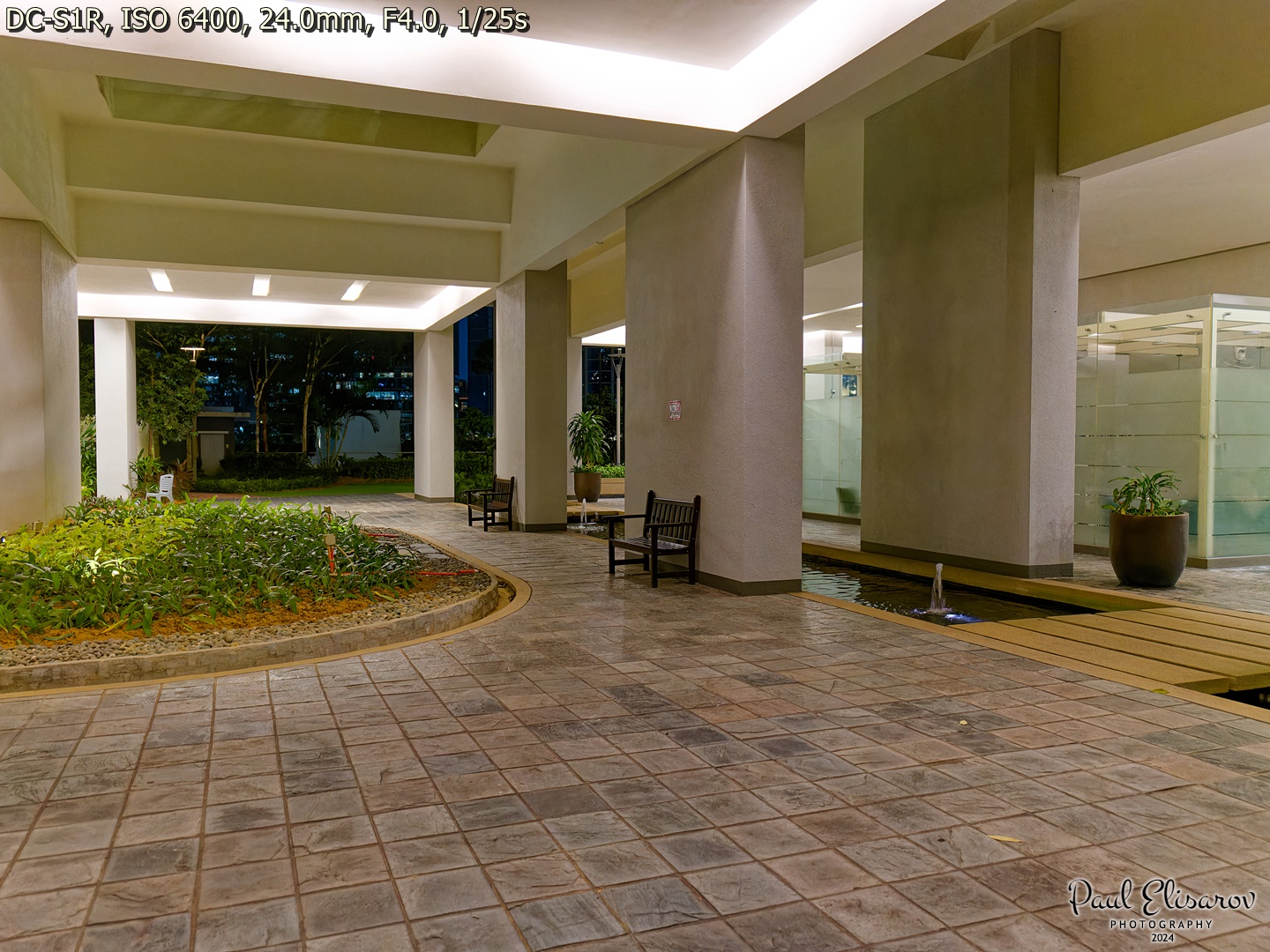
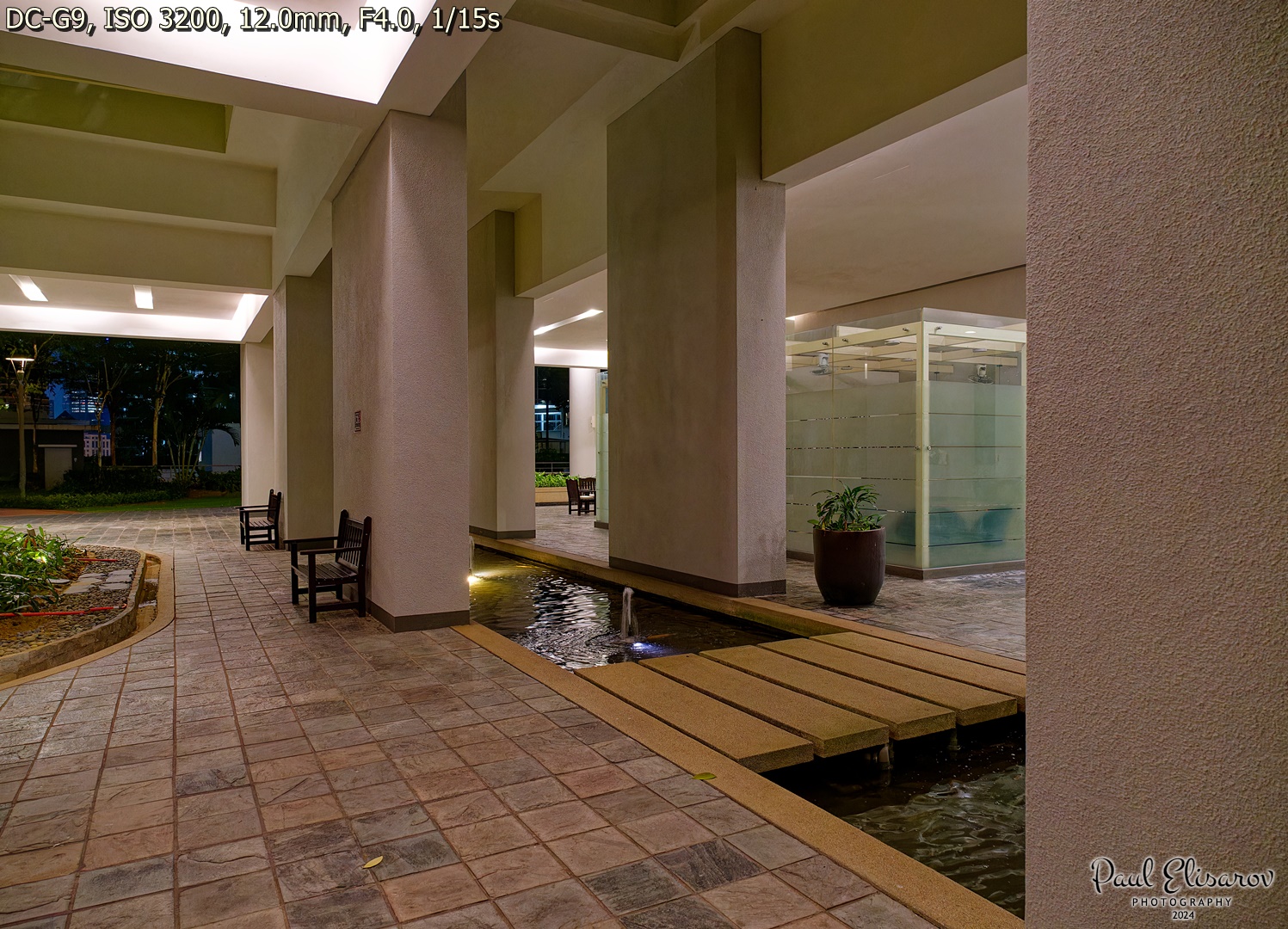
 This is also a very dark spot; there's no lighting, so I had to shoot with arms outstretched, and because of that, I took 3 shots with each camera. The G9 gave three sharp frames, while the S1R messed up all three—the stabilizer didn't cope.
By the way, note—MFT and FF give an IDENTICAL exposure trio. This proves that in terms of light transmission, f/4 on MFT is exactly the same as f/4 on FF. I never tire of repeating this, but some people think otherwise. Equivalent aperture concerns ONLY depth of field, not light transmission!
You can see the remaining pair here:
Panasonic S1R Image:
This is also a very dark spot; there's no lighting, so I had to shoot with arms outstretched, and because of that, I took 3 shots with each camera. The G9 gave three sharp frames, while the S1R messed up all three—the stabilizer didn't cope.
By the way, note—MFT and FF give an IDENTICAL exposure trio. This proves that in terms of light transmission, f/4 on MFT is exactly the same as f/4 on FF. I never tire of repeating this, but some people think otherwise. Equivalent aperture concerns ONLY depth of field, not light transmission!
You can see the remaining pair here:
Panasonic S1R Image:
 Panasonic G9 Image:
 Let's also look at detail... Not long ago, I wrote an article comparing the detail of a phone (which was of course poor) with micro and the S1R. Here is that article.
But back then I had the Olympus E-PL7, a 16 MP camera with an AA filter. Now I have the G9 with 20MP and no AA filter. Let's see how much better the result is?
Let's also look at detail... Not long ago, I wrote an article comparing the detail of a phone (which was of course poor) with micro and the S1R. Here is that article.
But back then I had the Olympus E-PL7, a 16 MP camera with an AA filter. Now I have the G9 with 20MP and no AA filter. Let's see how much better the result is?
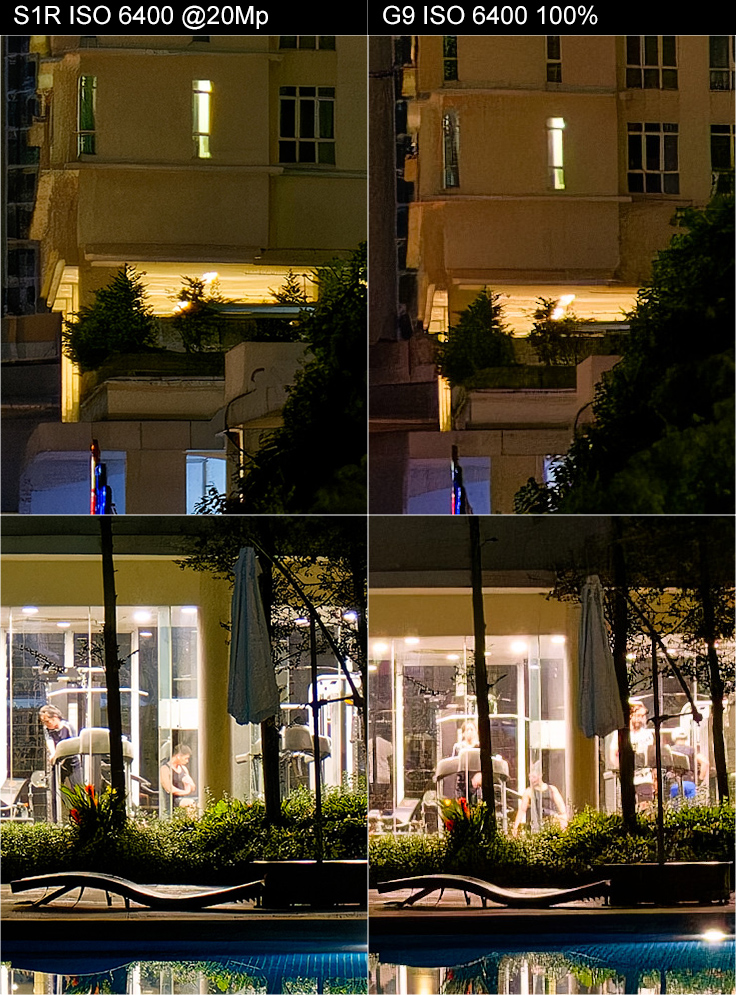 As before, I'll take a frame from the S1R, reduce it to 3888 pixels in height (the G9 frame), and compare—does the S1R give much more detail compared to the G9?
There is a difference, undoubtedly. But overall, it's fairly insignificant.
Well, it's time for conclusions...
Oddly enough, regarding noise, with a good noise reduction applied, the cameras are almost on par. The S1R certainly has an advantage, but you won't see it in the final result, neither in web images nor in prints. Up to ISO 6400 is perfectly usable on both cameras.
The G9's dynamic range is inferior to the S1R's, and it's quite noticeable, but more on artificial test shots like the ones I showed than in real life. This is an indisputable minus of the micro system, but it's not as huge as it used to be. Plus, if I really need to shoot something like that, I can always shoot it using Auto HDR.
The G9's sensor, lacking an AA filter, provides excellent detail, quite comparable to a full-frame camera. There is a difference, but it's not critical and not even very noticeable at 20MP.
That's all, thanks for your attention!
As before, I'll take a frame from the S1R, reduce it to 3888 pixels in height (the G9 frame), and compare—does the S1R give much more detail compared to the G9?
There is a difference, undoubtedly. But overall, it's fairly insignificant.
Well, it's time for conclusions...
Oddly enough, regarding noise, with a good noise reduction applied, the cameras are almost on par. The S1R certainly has an advantage, but you won't see it in the final result, neither in web images nor in prints. Up to ISO 6400 is perfectly usable on both cameras.
The G9's dynamic range is inferior to the S1R's, and it's quite noticeable, but more on artificial test shots like the ones I showed than in real life. This is an indisputable minus of the micro system, but it's not as huge as it used to be. Plus, if I really need to shoot something like that, I can always shoot it using Auto HDR.
The G9's sensor, lacking an AA filter, provides excellent detail, quite comparable to a full-frame camera. There is a difference, but it's not critical and not even very noticeable at 20MP.
That's all, thanks for your attention!
1.4K views