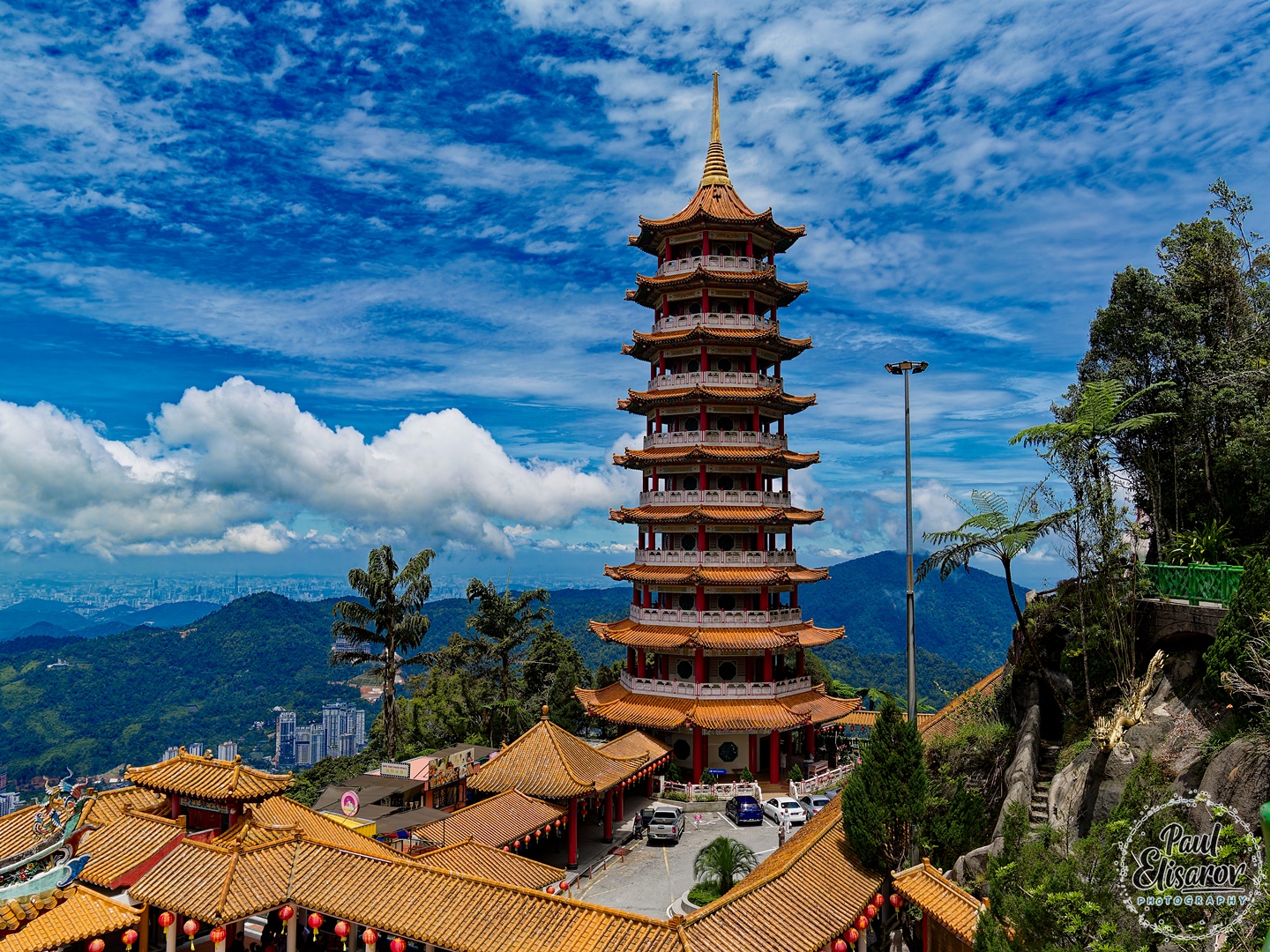
Chin Swee Temple in Genting Highlands, Kuala Lumpus
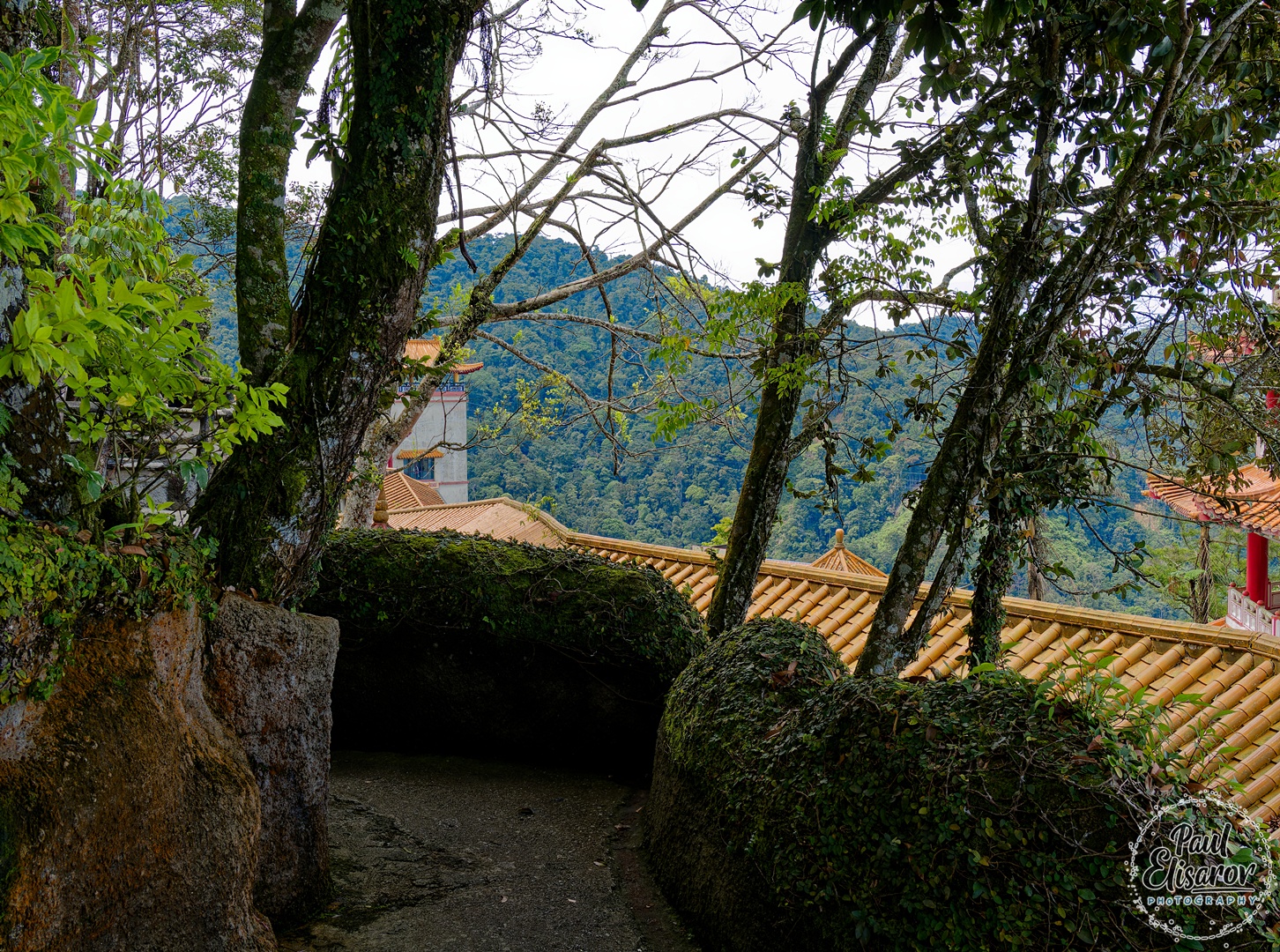
Drifting through the clouds at 1,400 meters above sea level, there’s a place where the mountain air itself seems to hum with centuries-old stories. The wind doesn’t just blow here — it whispers, carrying the scent of incense and the echo of chanted sutras across terraced hillsides. My first glimpse of the Chin Swee Caves Temple came through the glass floor of an Awana Skyway gondola: a flash of vermillion rooftops and a golden Buddha, floating improbably on a green velvet mountainside. I had left the sticky heat of Kuala Lumpur behind, and now, suspended between earth and sky, I felt the curious sensation of entering another realm entirely.
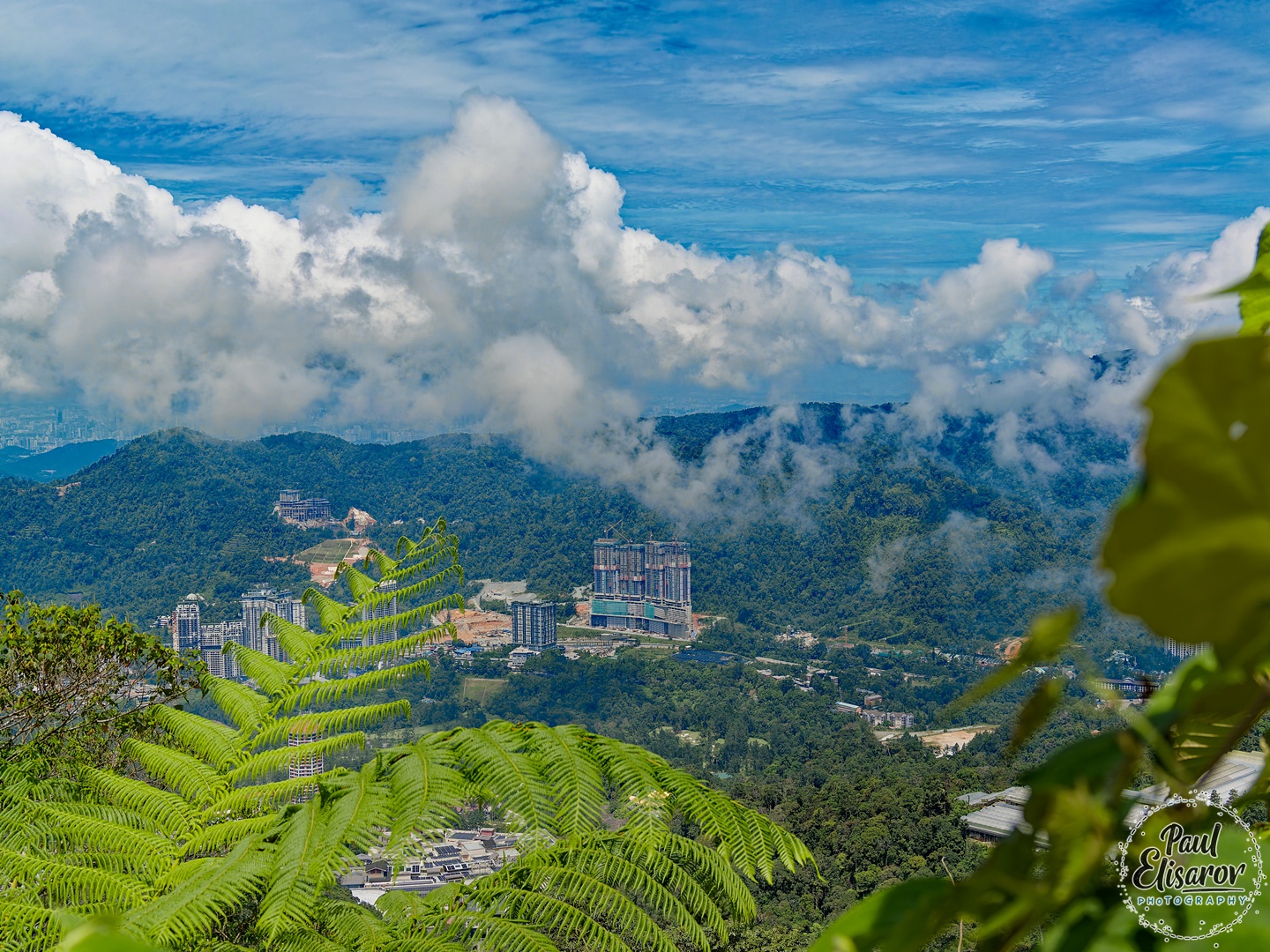
The journey to this mountaintop sanctuary is half the adventure, and blissfully straightforward. From Kuala Lumpur, I made my way to KL Sentral and hopped on an express bus bound for the Awana Bus Terminal, a comfortable ride of just under an hour that cost about RM10. Watching the urban sprawl give way to tangled jungle as we climbed into the Titiwangsa range, I felt the city’s grip loosening with every kilometer.
At the terminal, I joined the queue for the Awana Skyway cable car — and this, I must say, is the only way to arrive. The gondola glides over a dense rainforest canopy, and within ten minutes, the temple complex materializes below you, clinging to a rocky cliff like some celestial kingdom from an ink-wash painting. There are three stations: Awana is the start, SkyAvenue is the peak, but I alighted at the midway point — the Chin Swee stop — where a covered walkway leads directly to the temple grounds at no additional fare.
The temple’s very existence is a testament to one man’s devotion — and sheer stubbornness. After completing his first hotel and casino at Genting Highlands in 1975, the resort’s founder, the late Tan Sri Lim Goh Tong, turned his attention to a far more personal project. A deeply spiritual man from Fujian Province’s Anxi county, he longed to honor the deity his family had venerated for generations.
Gathering fellow clan members, he established the Chin Swee Temple Society, donated a sprawling 28-acre plot of rocky forested land, and personally contributed RM8.1 million through his companies. What followed was eighteen years of backbreaking labor — the terrain was so precipitous that modern piling machinery proved useless, forcing workmen to dig foundations 80 to 100 feet deep by hand.
With Lim himself acting as planner, architect, designer, contractor, and supervisor, the temple finally opened its doors on March 29, 1994, miraculously completed without a single reported accident. Standing there, I tried to imagine the sheer audacity required to carve a temple complex from raw mountainside — it felt less like construction and more like an act of faith made visible.
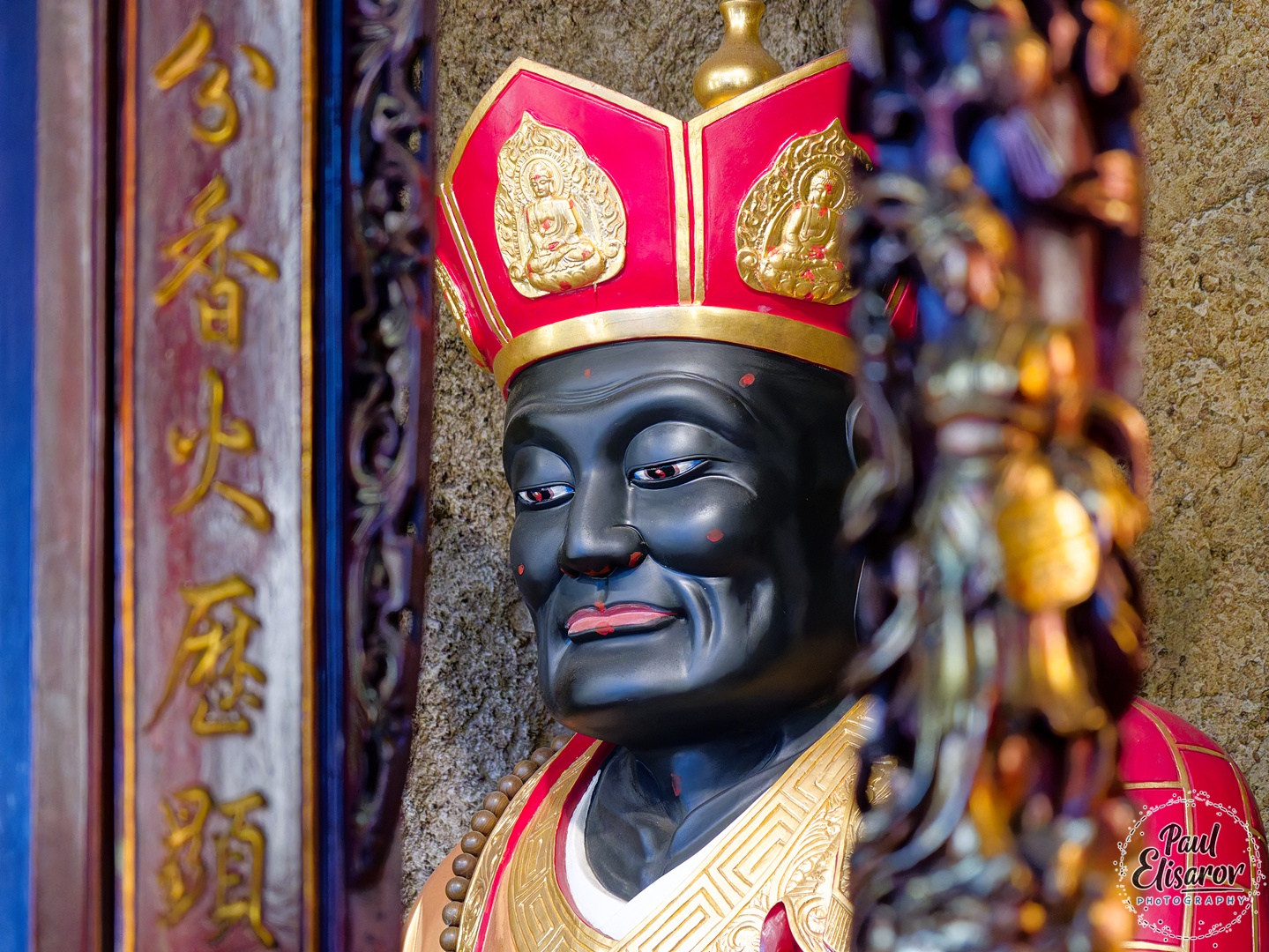
But to appreciate the temple, you must first know the man it venerates. Reverend Chin Swee — known in China as Qingshui Zushi, or Patriarch of the Clear Water — was a Chan Buddhist monk born in 1047 during the Northern Song Dynasty. His reputation for the miraculous began early: when his village suffered a devastating drought, he prayed, and the heavens answered with life-giving rain. He was also said to possess profound healing knowledge, curing the sick when no one else could. And then there is the mystery of his face.
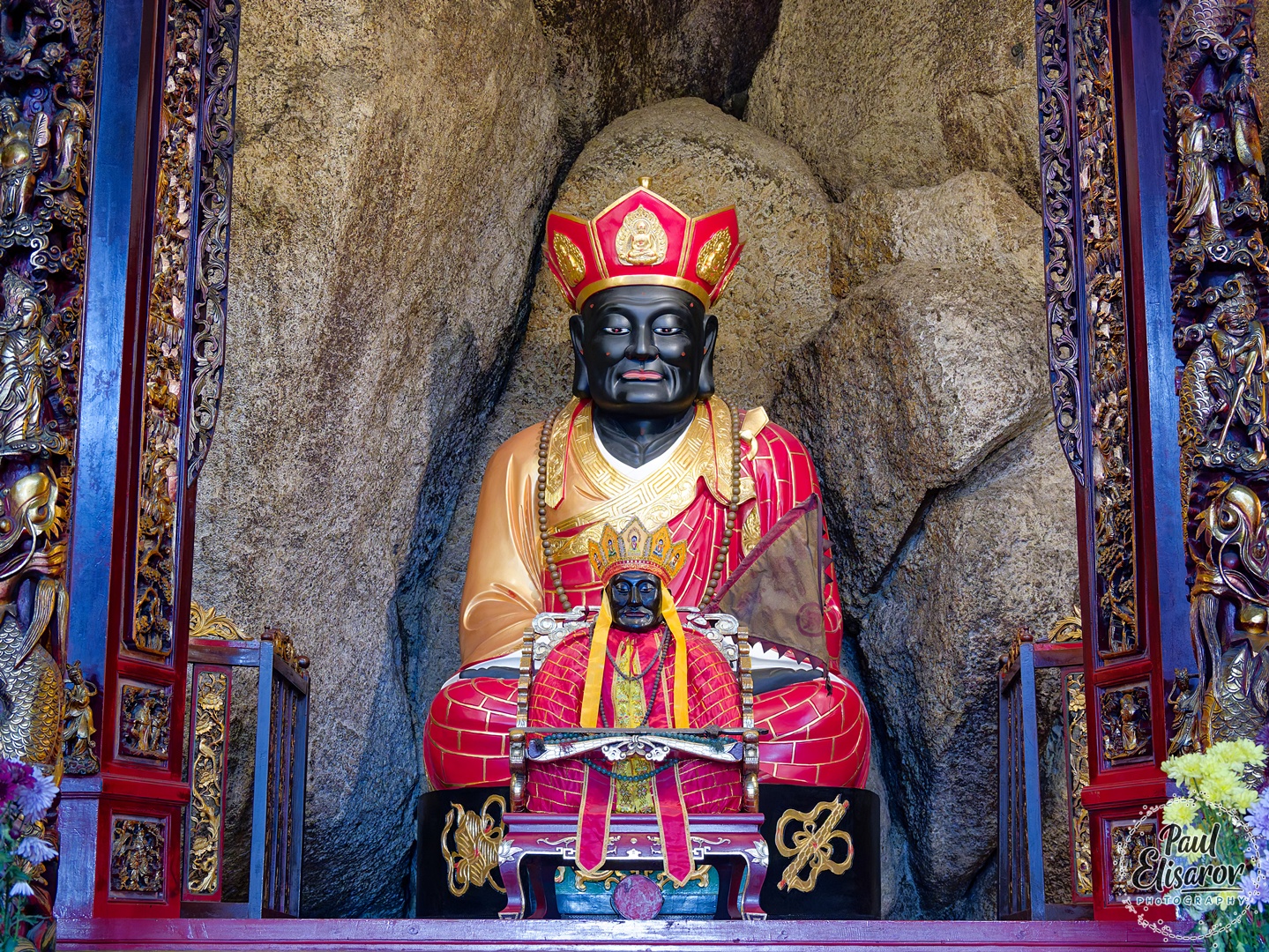
Everywhere you look in this temple — in paintings, in statues — he appears with skin as black as charcoal. Why? The legend is unforgettable. One day, while meditating in a cave at Qing Sui Yan, four local demons sealed the entrance and set the mountain ablaze, determined to destroy the holy man. For seven days and seven nights, the fire raged. When the flames finally died, the demons expected to find ashes — instead, Reverend Chin Swee emerged alive, his face blackened permanently by soot. The demons, awestruck by his spiritual attainment, became his devoted Dharma guardians. Even now, statues of these four reformed demons stand guard at the temple entrance, eternal witnesses to the power of forbearance over violence.
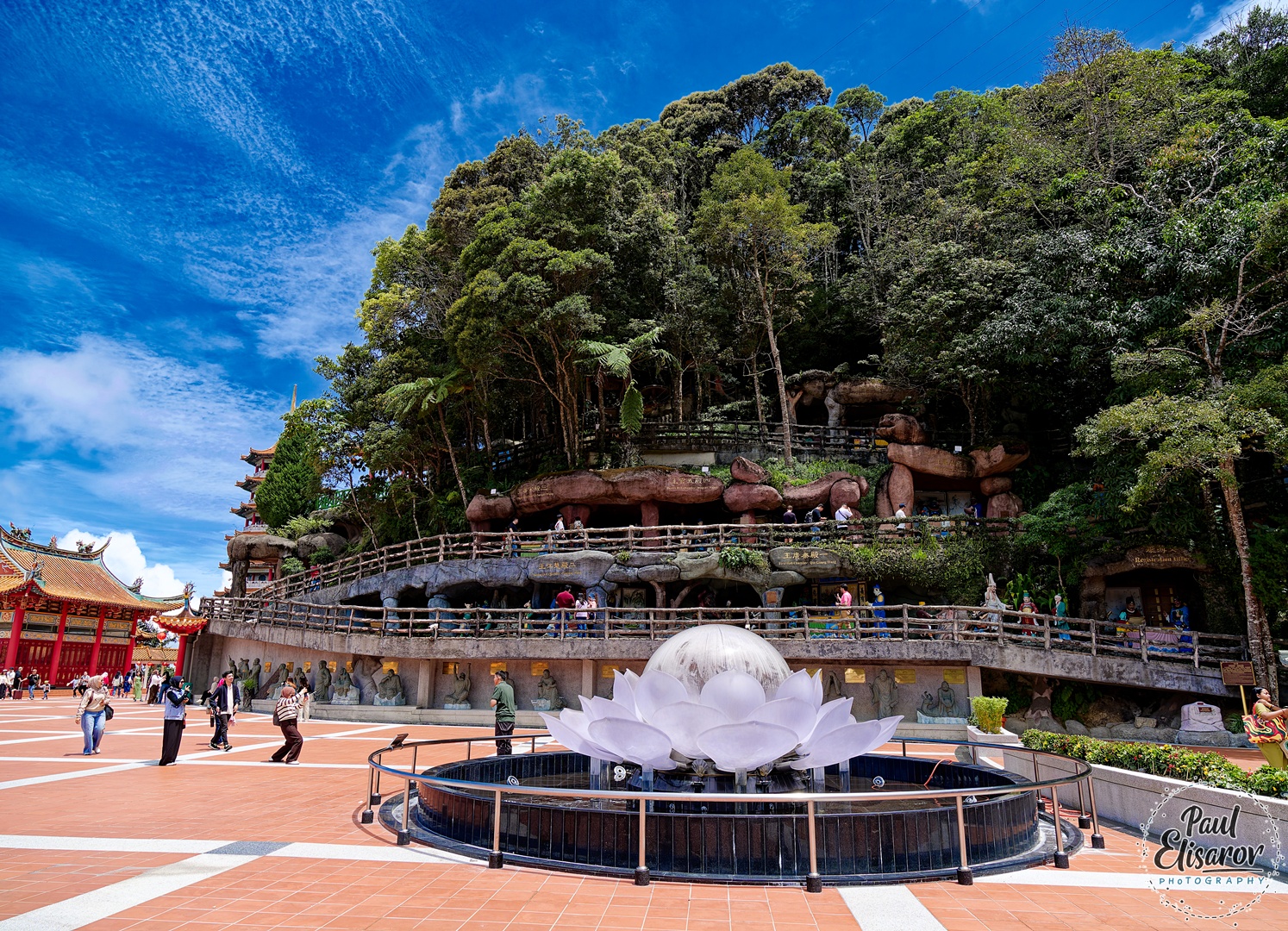
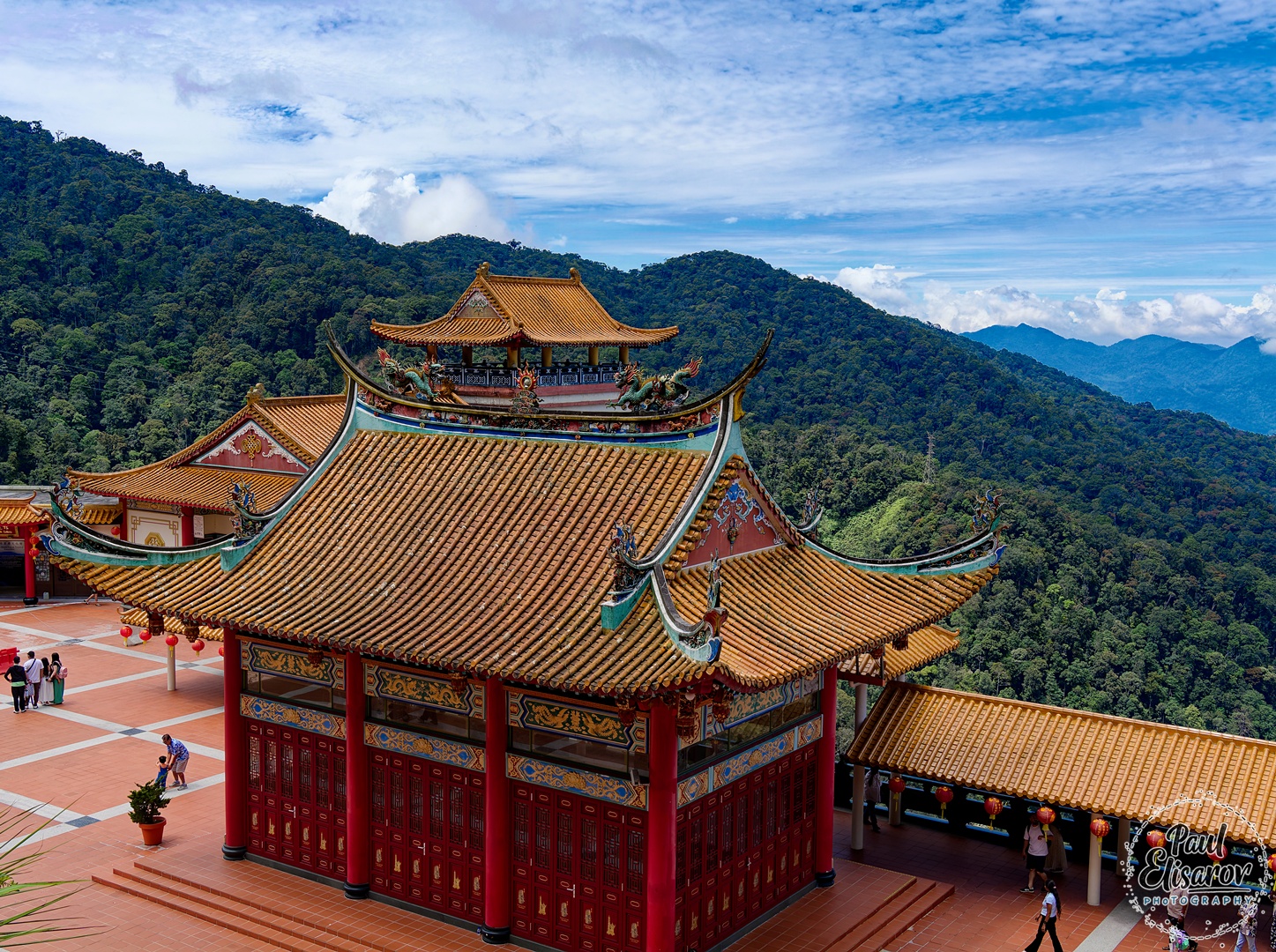
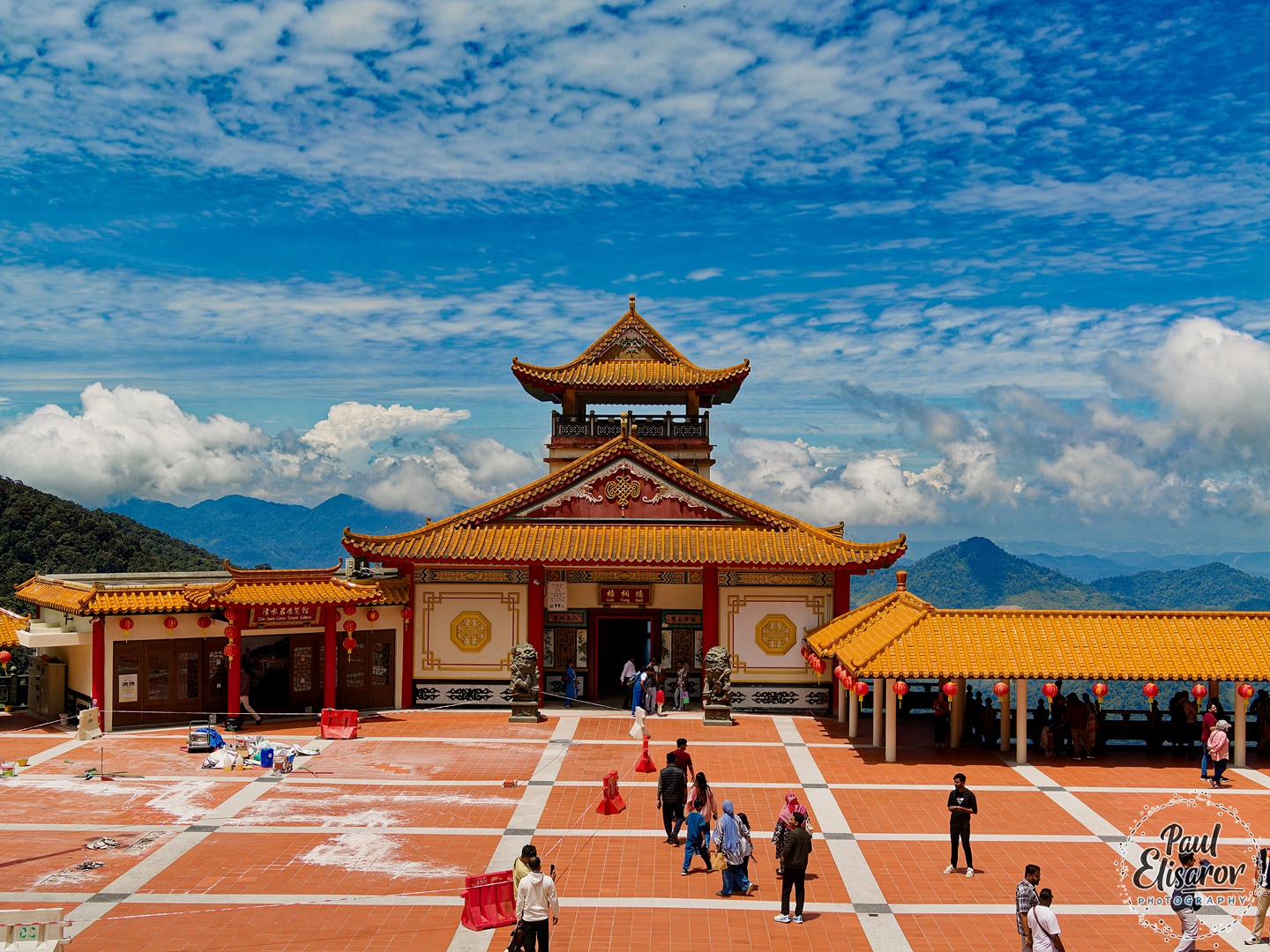
I emerged onto the main square and was immediately struck by its theatrical grandeur. Dominated by a soaring pagoda and ringed by smaller shrines, the open plaza feels like the temple’s public face — but here’s the secret that delighted me: it isn’t the temple at all. The real Chin Swee Caves Temple lies hidden directly beneath this square, built into the living rock of the mountainside. Discovering this felt like finding a hidden chamber in an ancient tale — the square above busied itself with sunlight and tourists while the true heart of the sanctuary beat quietly below.
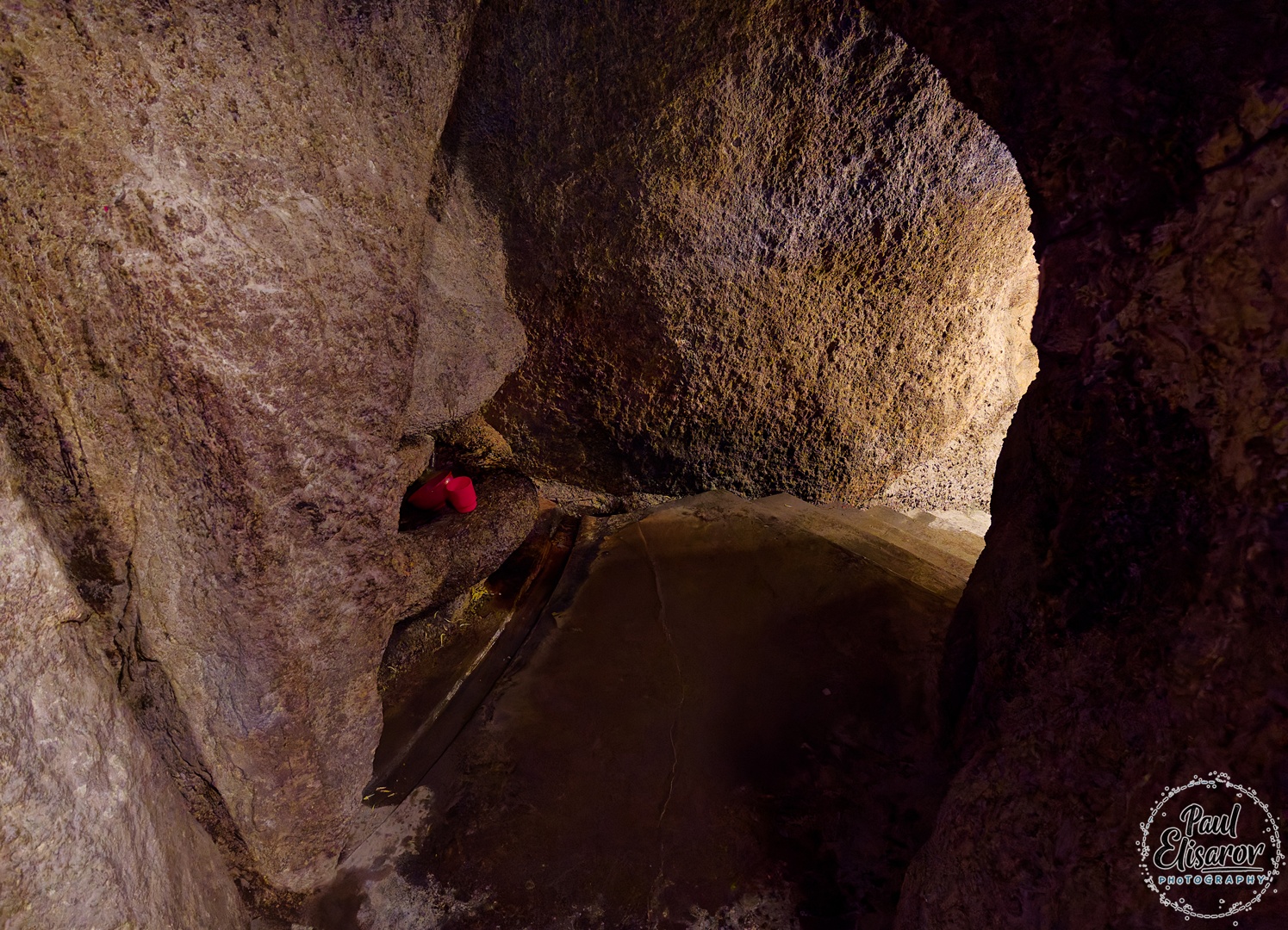
I descended into the half subterranean prayer hall and found myself in a vast cavern, half-carved by nature and half-shaped by human hands. The rear wall is raw, untouched stone — the original cave — and the air is noticeably cooler, heavy with the scent of damp rock and incense.
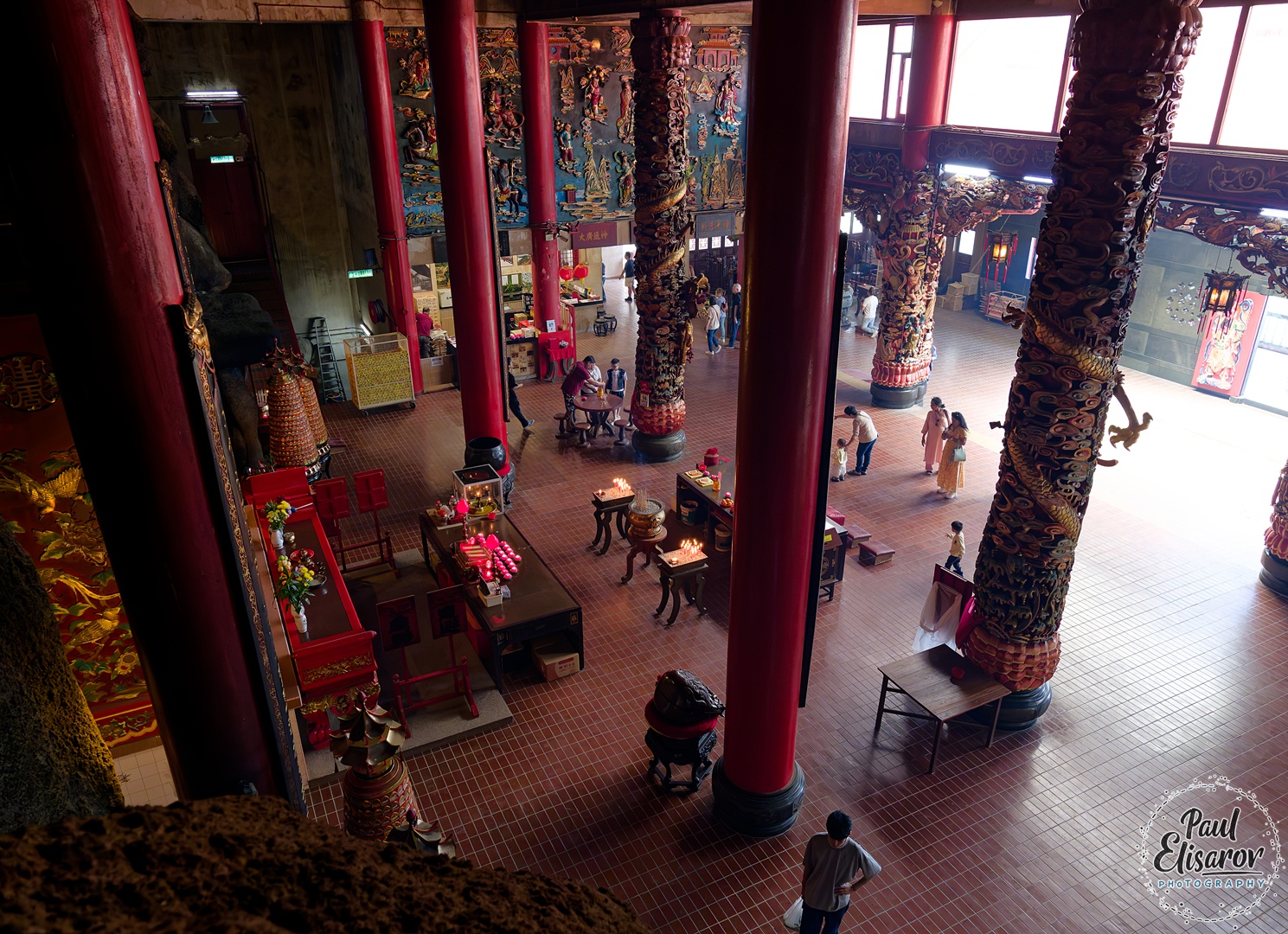
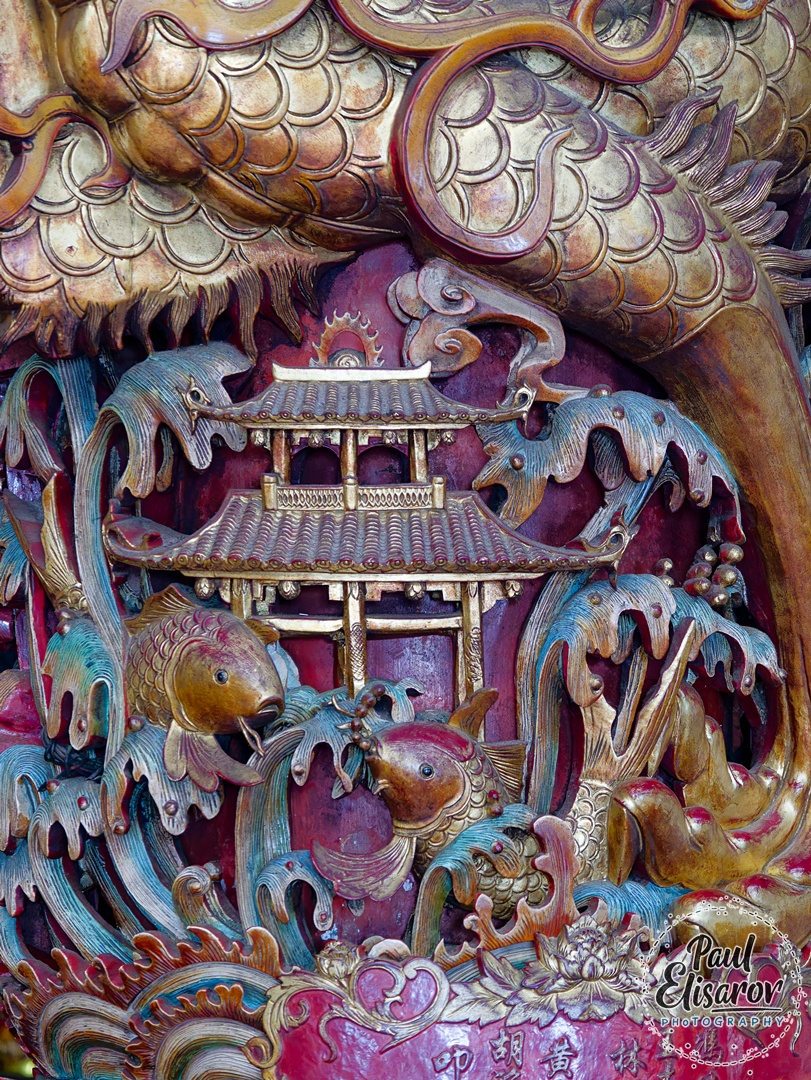
What seized my attention immediately were the pillars. Massive, intricately carved columns rise from floor to ceiling, each one entwined with coiling dragons whose scales are rendered in exquisite detail.
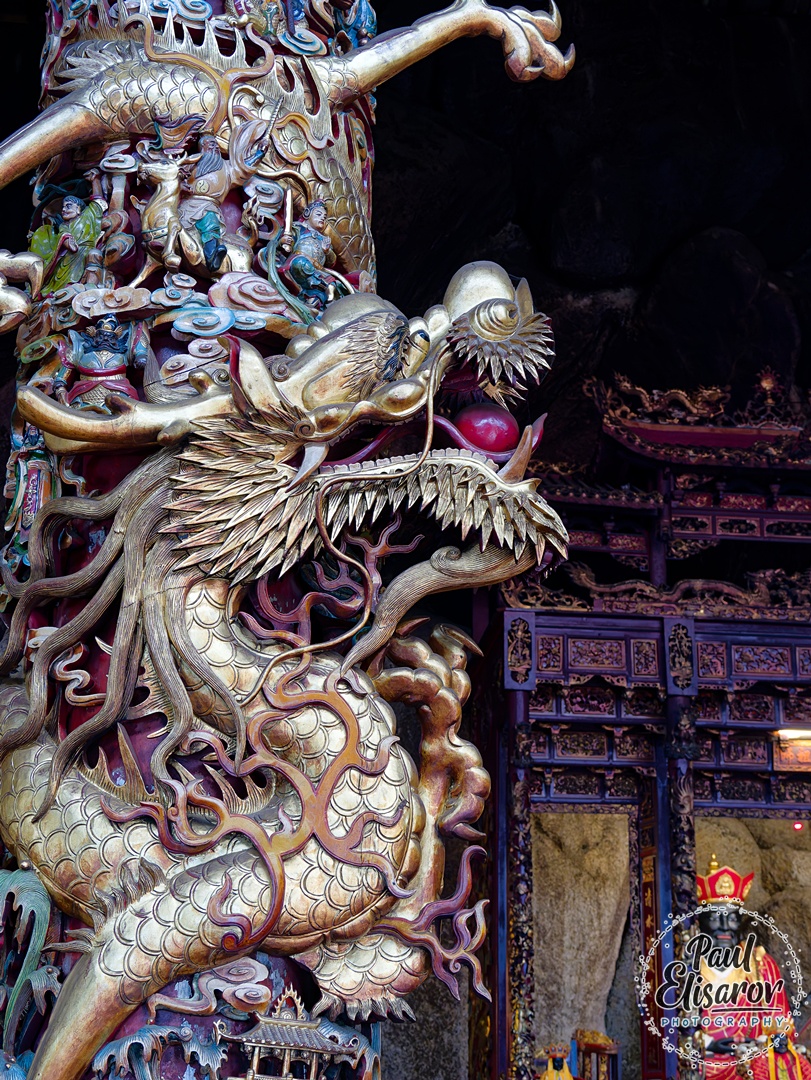
The serpents twist upward in perpetual pursuit of flaming pearls, their claws clutching the stone, their faces fierce yet protective. I must have stood there for ten minutes simply circling one pillar, my camera clicking away as shifting light brought new details into relief — a whisker here, a coil there — each angle telling a different story.
At the heart of the hall, presiding over the altar, sits the statue of Reverend Chin Swee himself: a black-faced monk in full ceremonial robes and a five Dhyani Buddha hat, hands resting in meditation, his expression one of imperturbable calm.
And behind the statue, tucked away where most visitors might miss it, is the Dragon Spring. A stream of clear water trickles from the cave’s natural rock face, collected in a stone basin. According to local belief, this holy water possesses healing properties. I cupped my hands under the cold flow, drinking deeply and splashing my face — whether the waters truly bring health I cannot say, but I can tell you they feel impossibly pure, as if the mountain itself is offering a blessing.
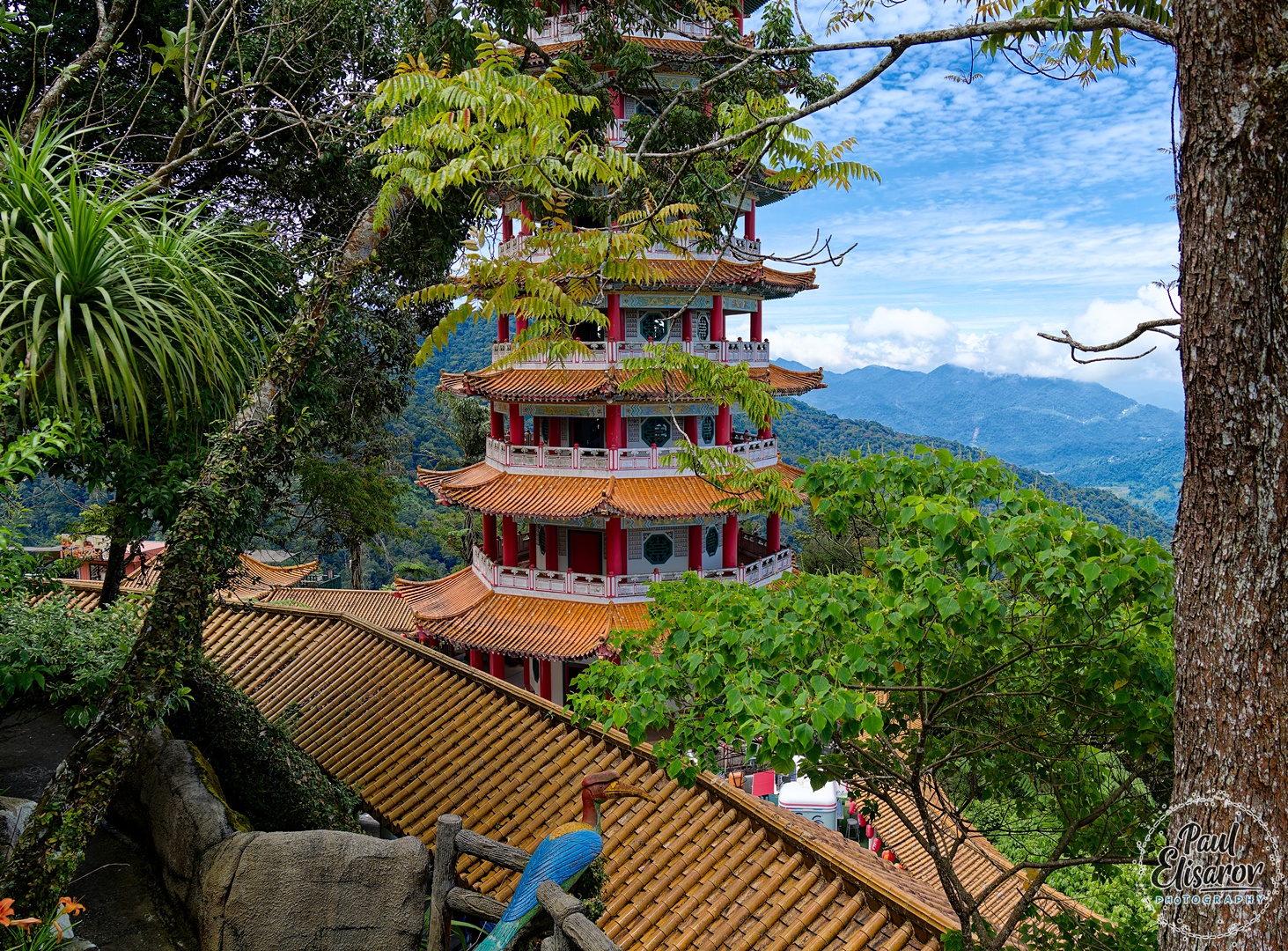
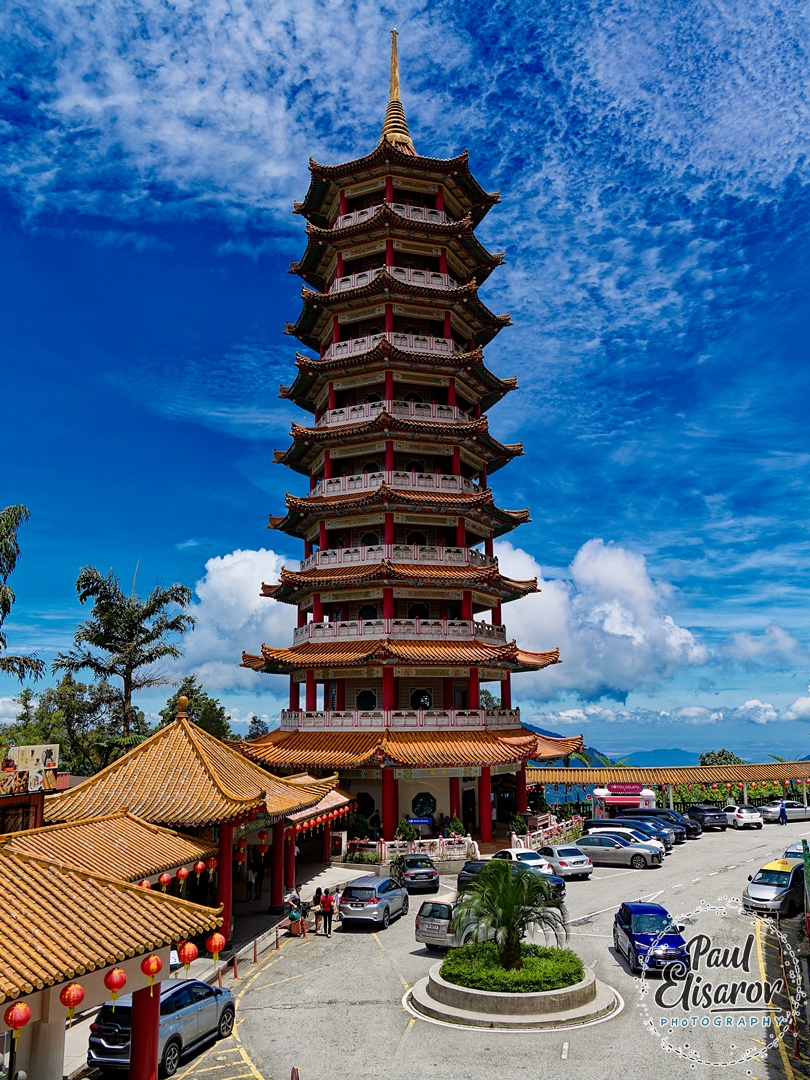
Back on the main square, the nine-tiered pagoda commands the skyline, its deep red facade glowing against the encroaching twilight like a lantern made of stone. Each of its nine stories is adorned with Buddha images and houses blessing lamps — 10,000 of them in total — which devotees can dedicate to loved ones seeking the Buddha’s blessings. A spiral staircase winds up through the pagoda’s core, and yes, you can climb it — all 285 steps to the summit. I began my ascent, pausing at each level to catch my breath and peer through latticed windows.
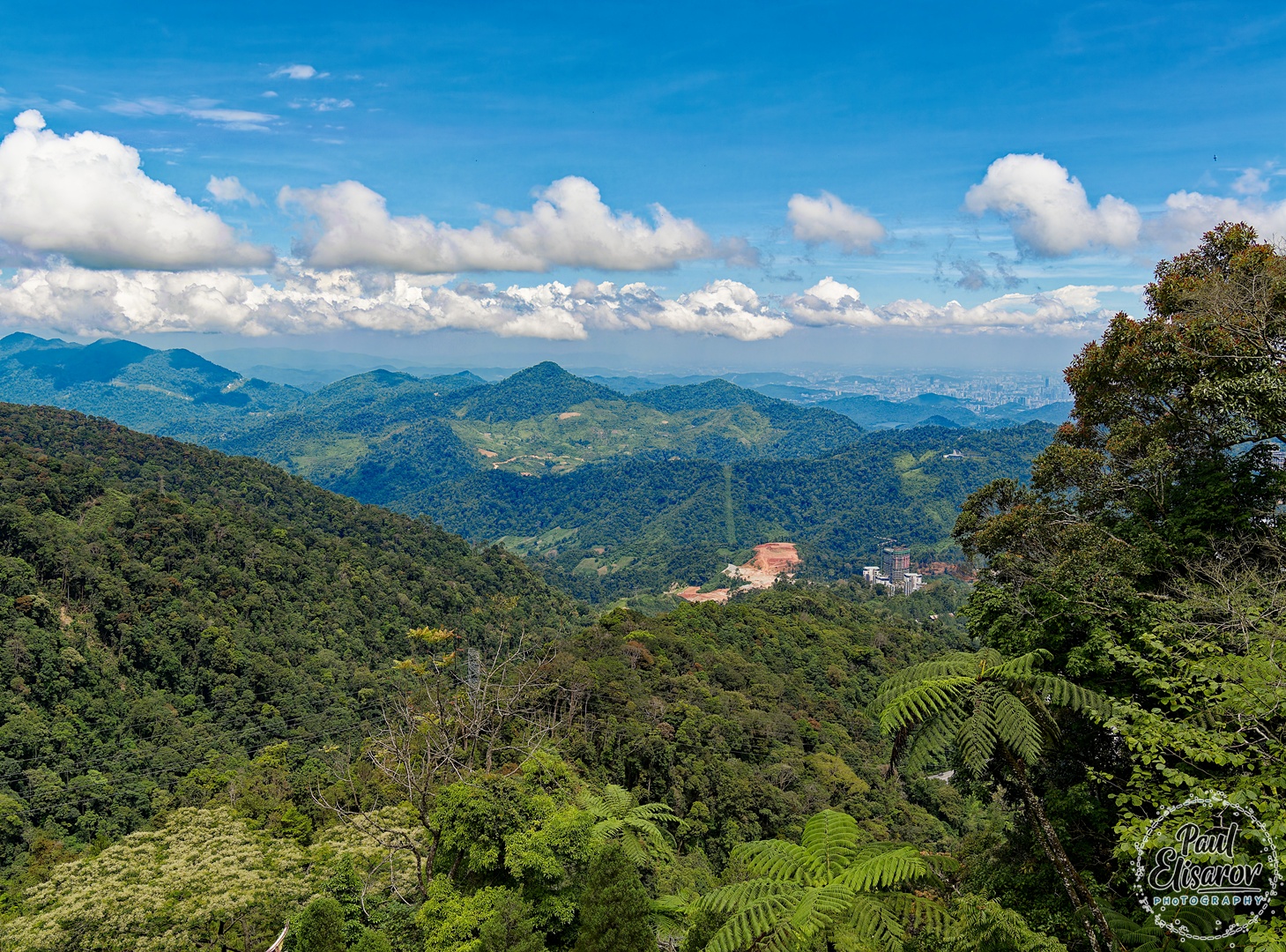
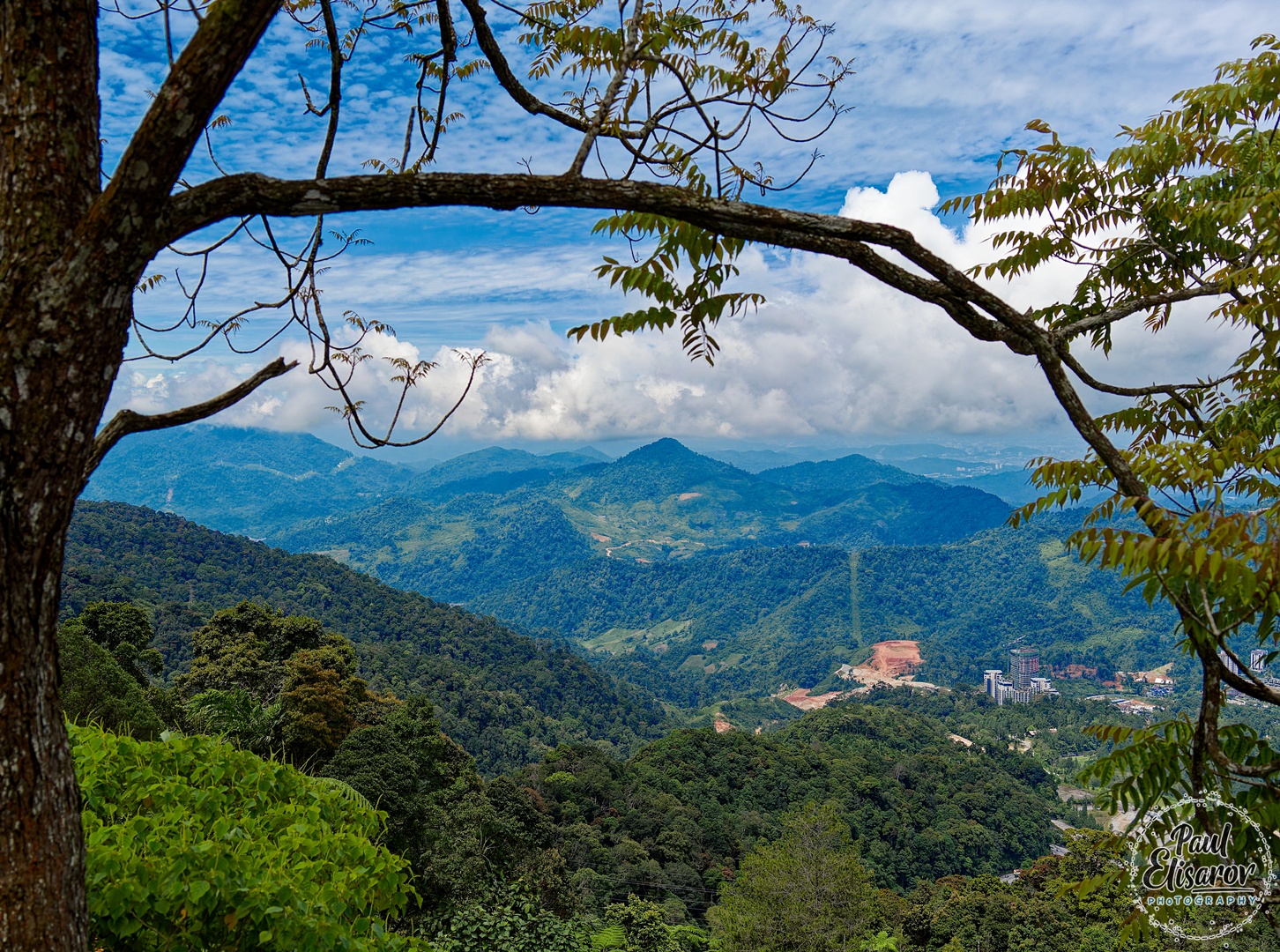
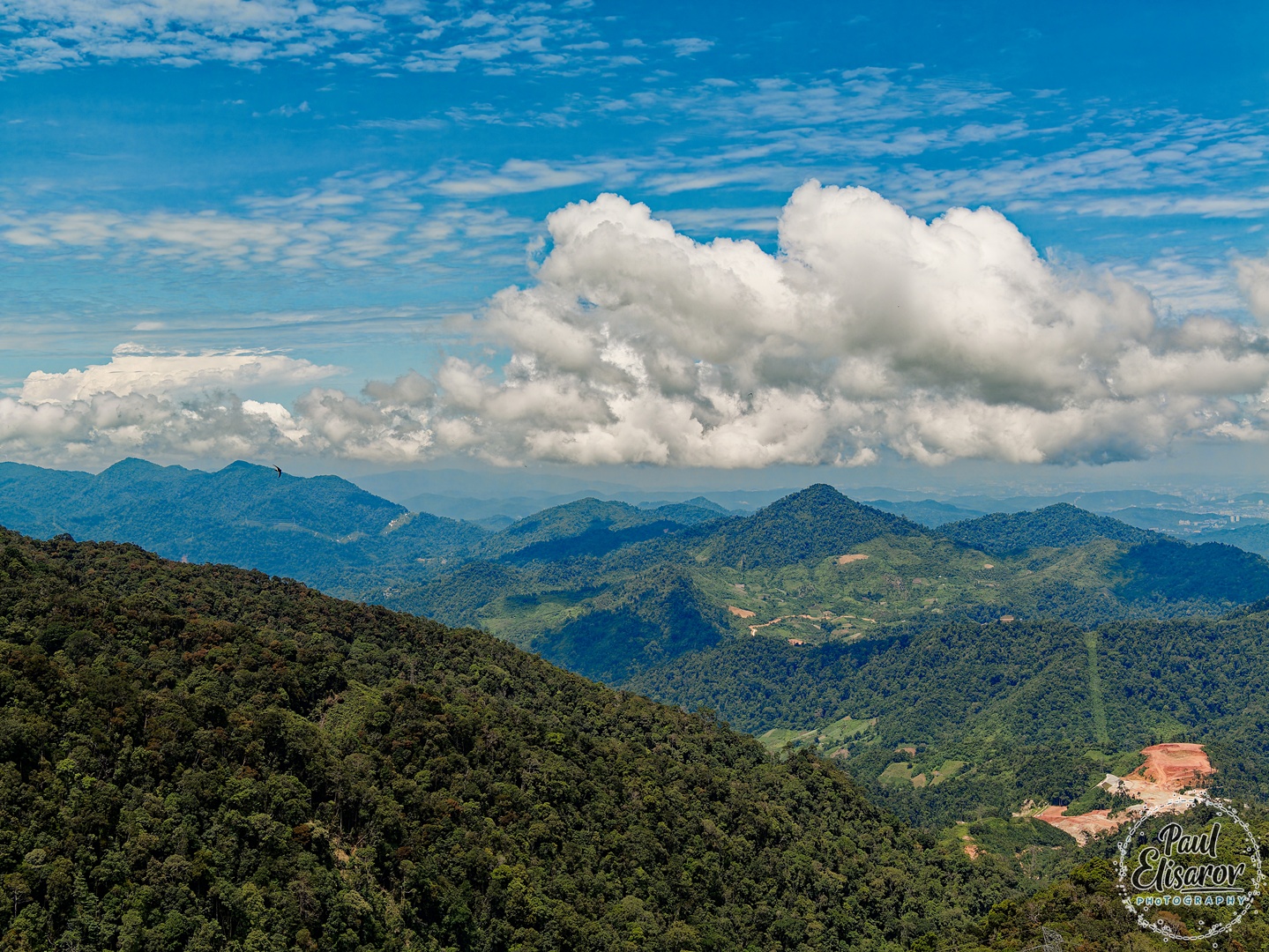
The higher I climbed, the more breathtaking the panorama became: the entire temple complex spread out below, then the forested slopes of the Titiwangsa range, and finally, at the very top, a view that seemed to stretch into infinity. Standing there with the wind whipping through the open windows, I understood why the pagoda is designed as a spiritual ascent — climbing those steps feels like leaving the mundane world behind, one tier at a time.
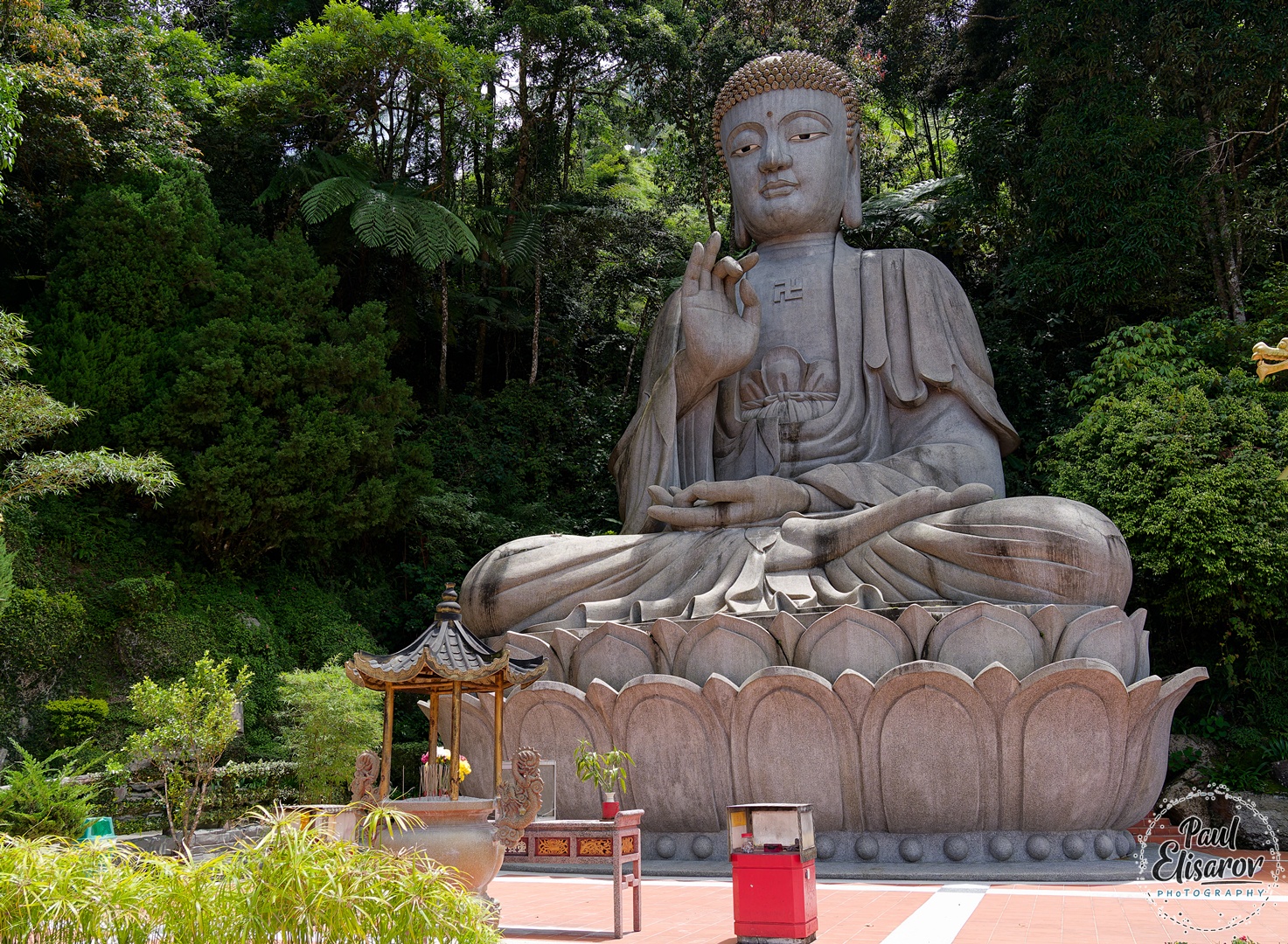
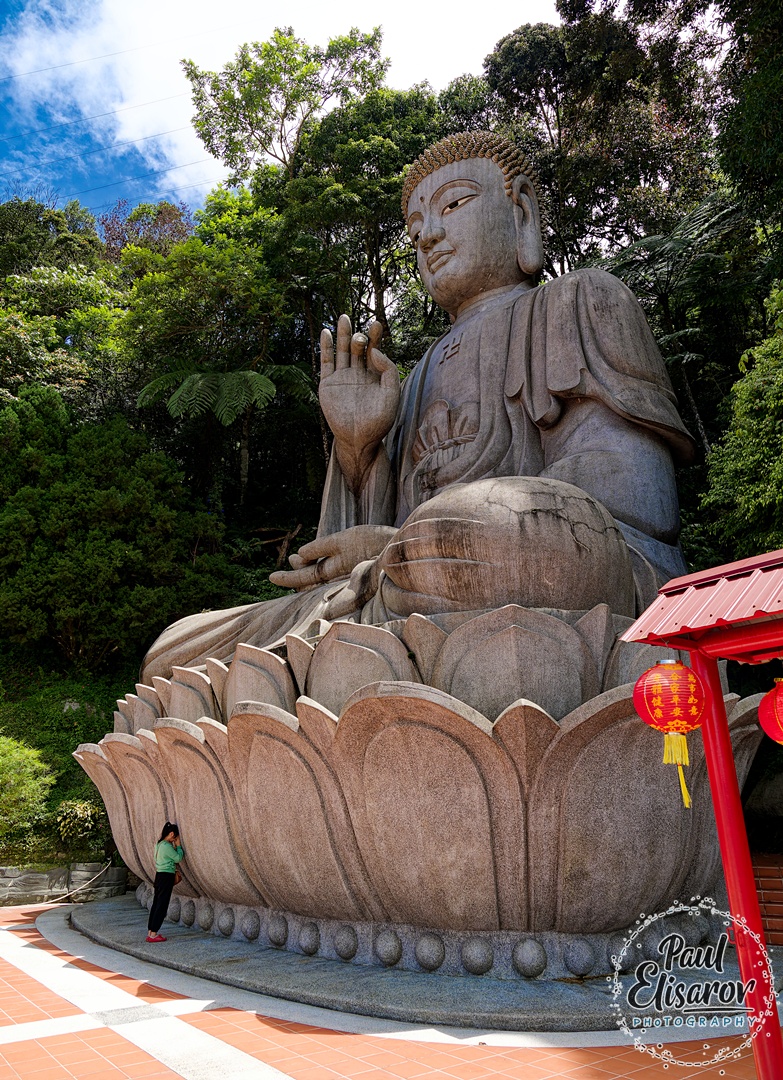
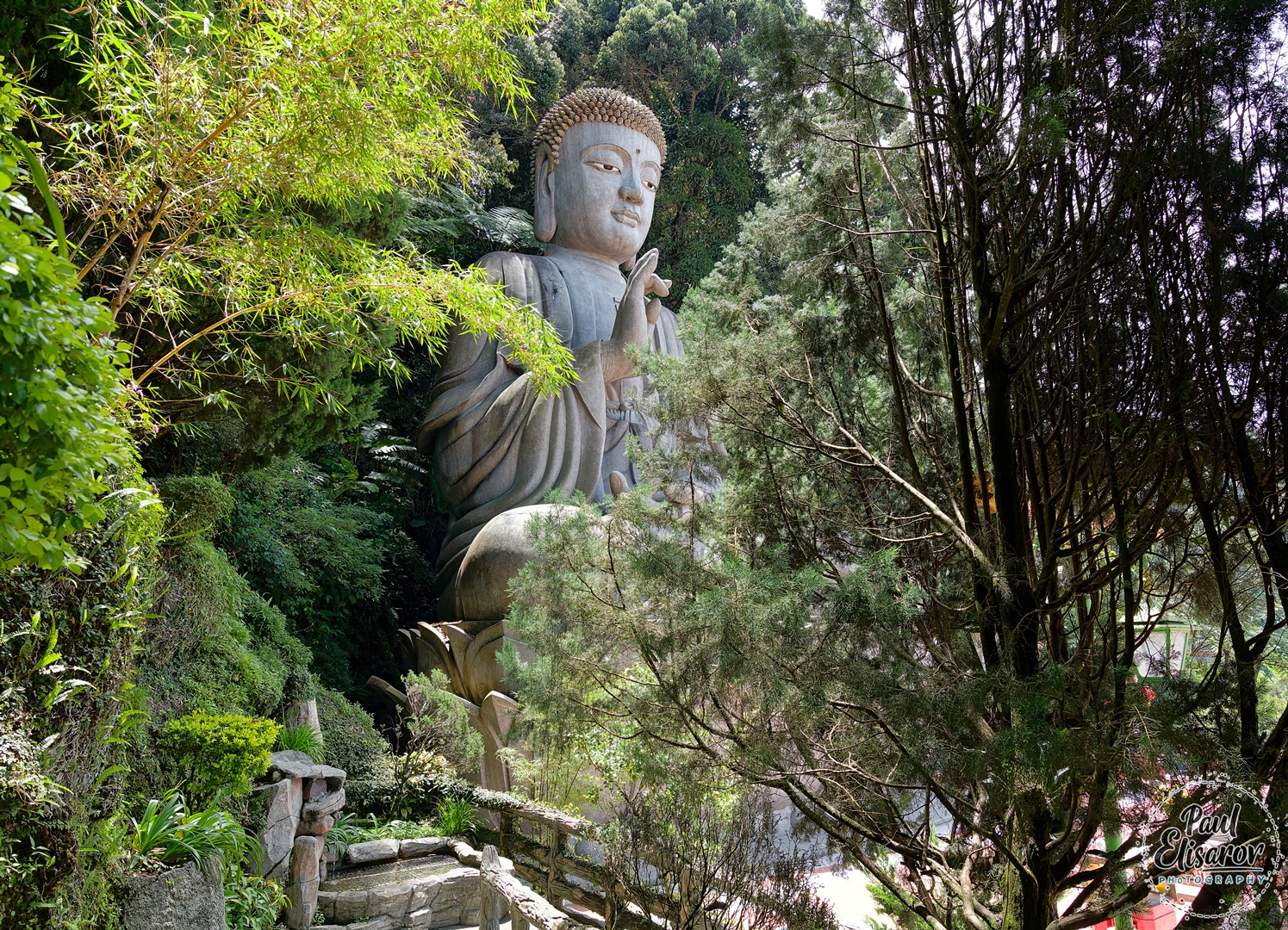
On the upper level of the square in the opposite part of it from the pagoda, seated in magnificent solitude on an elevated perch, is the Giant Buddha. This 15-meter-tall statue, cast in concrete and painted a luminous gold, gazes serenely over the temple grounds with an expression of infinite compassion.
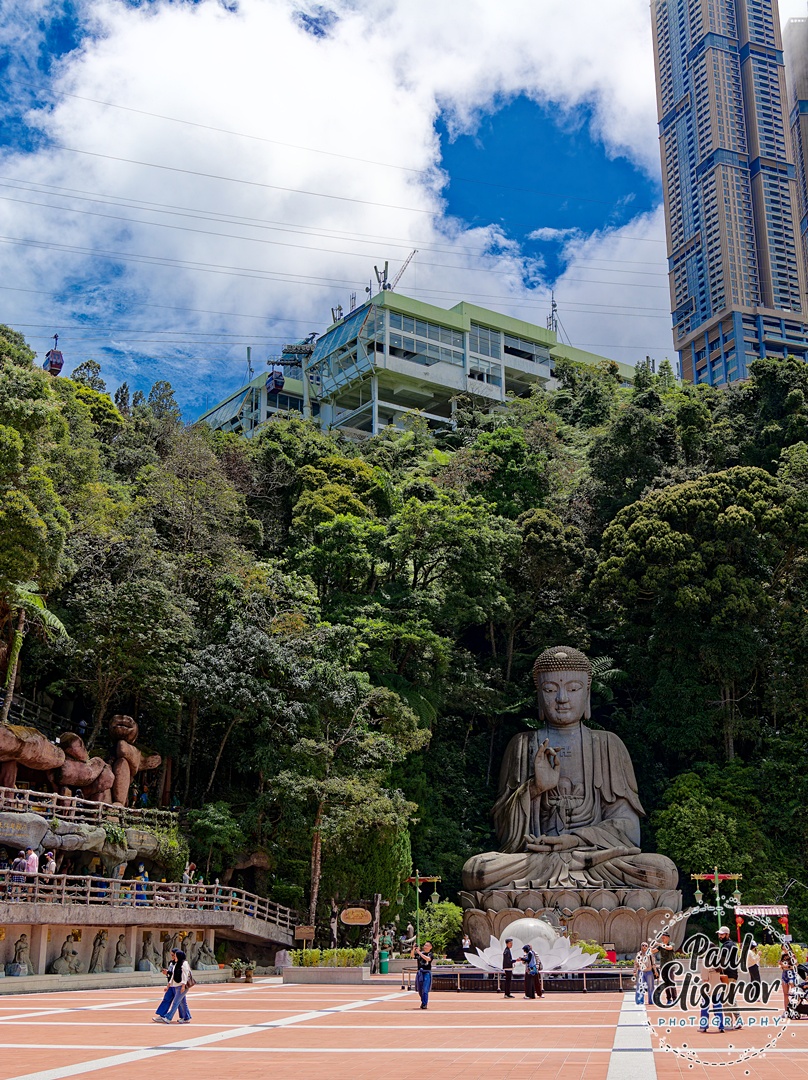
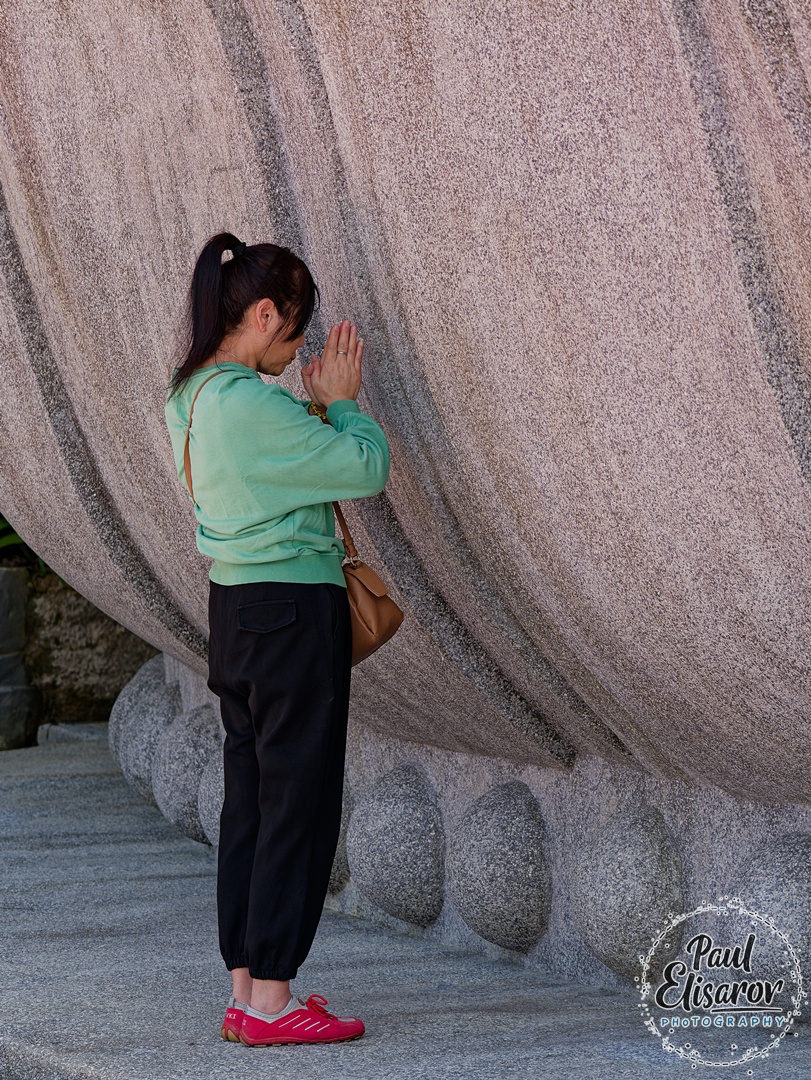
The Buddha — believed to represent Amitabha, one of the most revered figures in Mahayana Buddhism — seems almost to float above the landscape, shimmering in the mountain light. I climbed the steps to the Buddha’s pedestal and stood in its shadow, feeling impossibly small. From this vantage point, you can see the entire complex laid out like a map, the pagoda to one side, the cave temple below, and beyond, the winding road ascending to Genting’s peak. It is, without question, one of the most photographed spots in the temple, and yet no photograph quite captures the sense of peace that settles over you here.
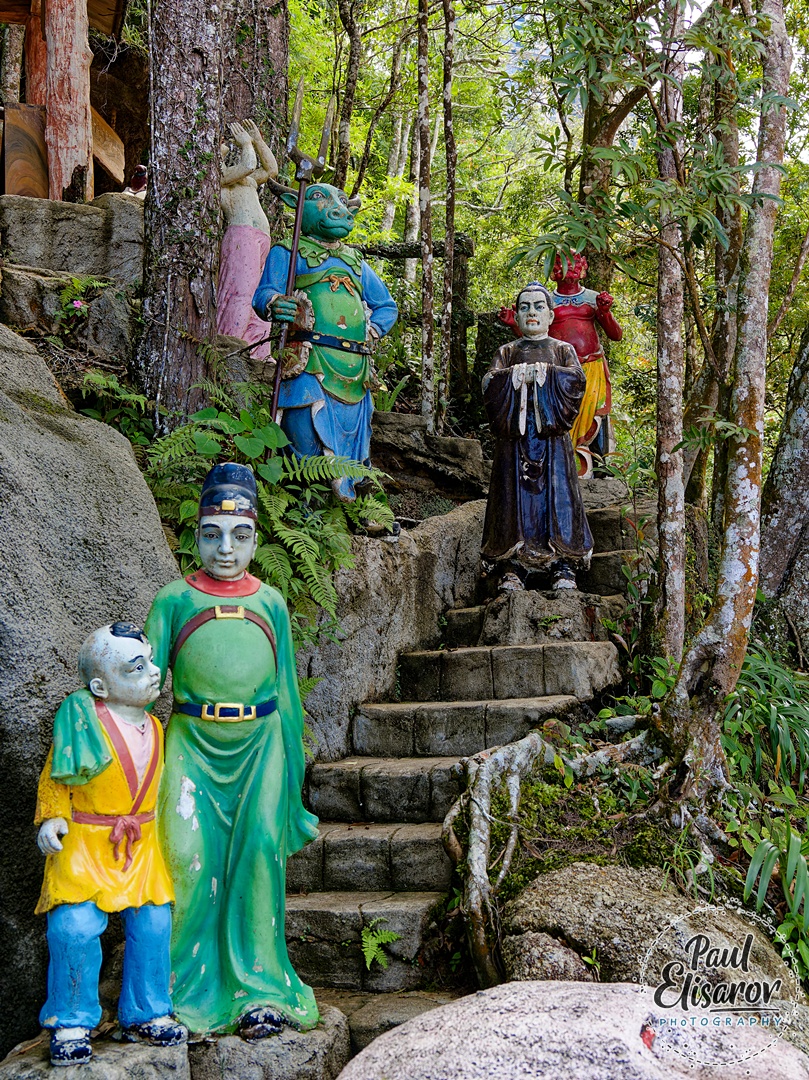
It was from the Buddha’s pedestal that I noticed a path winding up into the hillside, and curiosity led me to what would become the most intense experience of my visit: the Path of Enlightenment, also known as the Ten Chambers of Hell. This is no gentle garden stroll. The path winds upward through a series of grottos cut directly into the rocky slope, each chamber housing life-sized dioramas that depict the gruesome fate awaiting sinners in the afterlife.
I stepped into the first chamber, where Qin Guang Wang, the King of the First Court, holds the Mirror of Reflection — a device that forces souls to witness every misdeed of their past life. From there, the journey ascends through increasingly harrowing scenes. In the Second Chamber, kidnappers, adulterers, and doctors guilty of malpractice endure their punishments. The Third Chamber awaits the ungrateful and disloyal. Tax evaders and bullies suffer in the Fourth Chamber; rapists and murderers in the Fifth; vandals and religious scoffers in the Sixth; traffickers, gamblers, and killers in the Seventh. The Eighth Chamber — perhaps the most sobering for anyone raised in a traditional Chinese household — is reserved for those who failed in filial piety, disrespecting or mistreating their parents. The graphic depictions of torture are deeply unsettling: figures impaled on fiery stakes, crushed beneath slabs, dismembered by demons with animal heads. The path reaches its darkest point in the Tenth Chamber, where Meng Po, the Lady of Forgetfulness, serves her famous broth, erasing all memories before souls are sent across the bridge to their next incarnation.
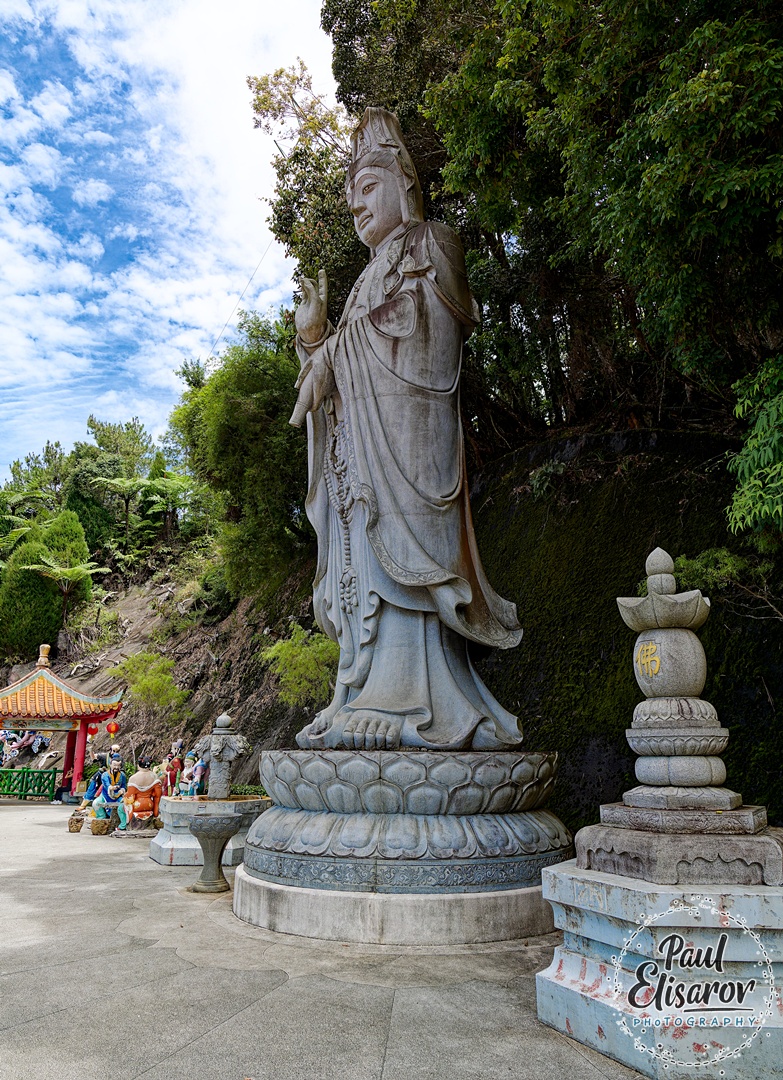
Yet just when the weight of all this suffering becomes almost unbearable, the path opens onto sunlight, and there she stands — a towering statue of Guanyin, the Bodhisattva of Compassion, her serene face turned toward you as if she has been waiting all along. In Buddhist tradition, it is Guanyin who hears the cries of the suffering and descends even into hell to offer salvation through her infinite mercy. After the darkness of the grottos, standing before her felt like being rescued.
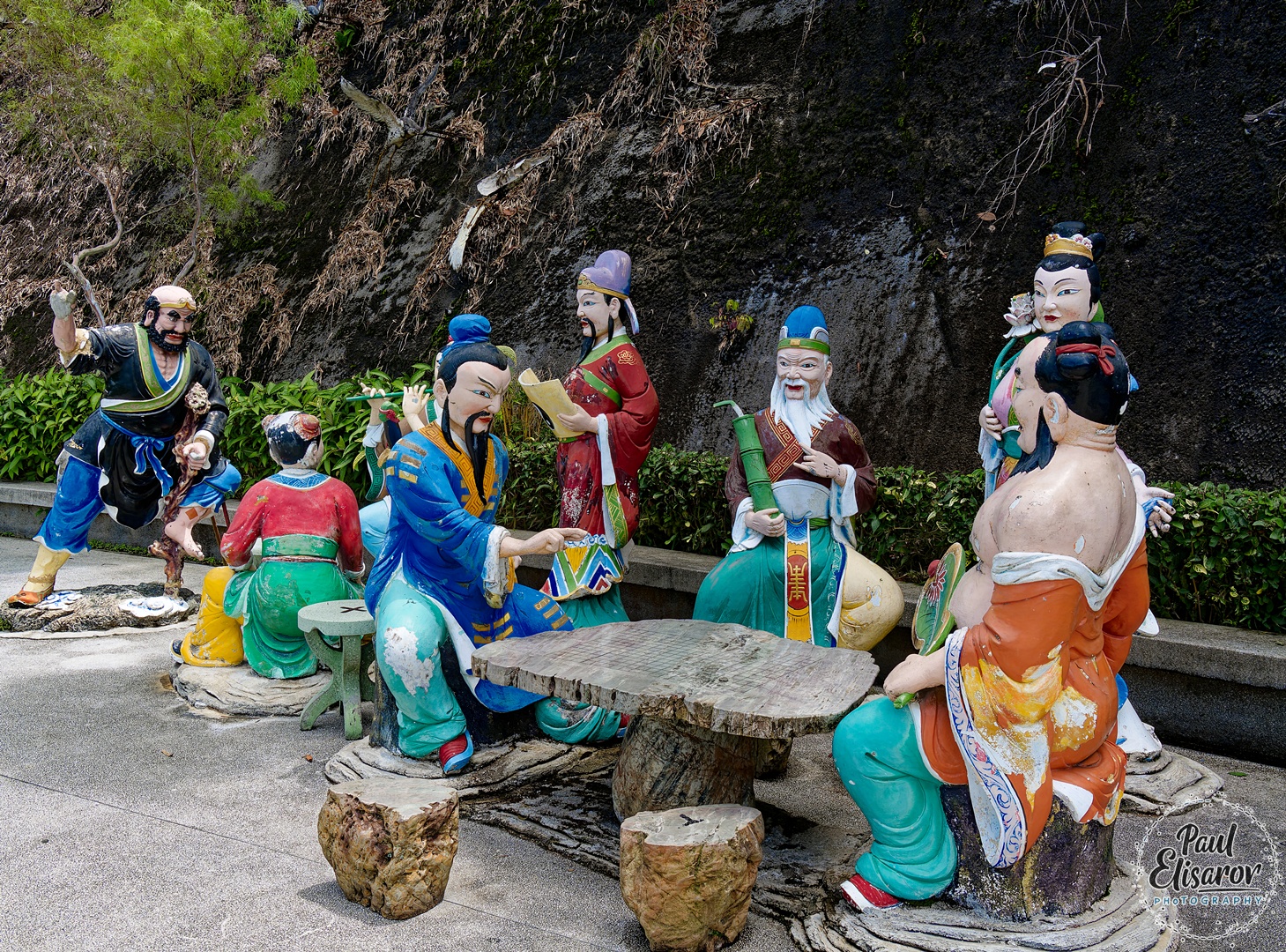
As I caught my breath in Guanyin’s presence, I noticed a group of figures nearby — the Eight Immortals, rendered in bright, lively statuary. These legendary Taoist beings — He Xiangu, Cao Guojiu, Lan Caihe, Lü Dongbin, Han Xiangzi, Zhang Guolao, Zhongli Quan, and Li Tieguai — achieved immortality not through divine birth but through rigorous self-cultivation, making them profoundly relatable figures. Each immortal embodies a different path: the scholar, the musician, the beggar, the noble, the old man. Standing among them, I realized their deeper meaning. They are living proof — quite literally — that anyone can achieve transcendence, that immortality is not reserved for gods alone. Every visitor who walks past these statues can find themselves reflected in at least one of them, a quiet promise that enlightenment is within reach for all who truly seek it.
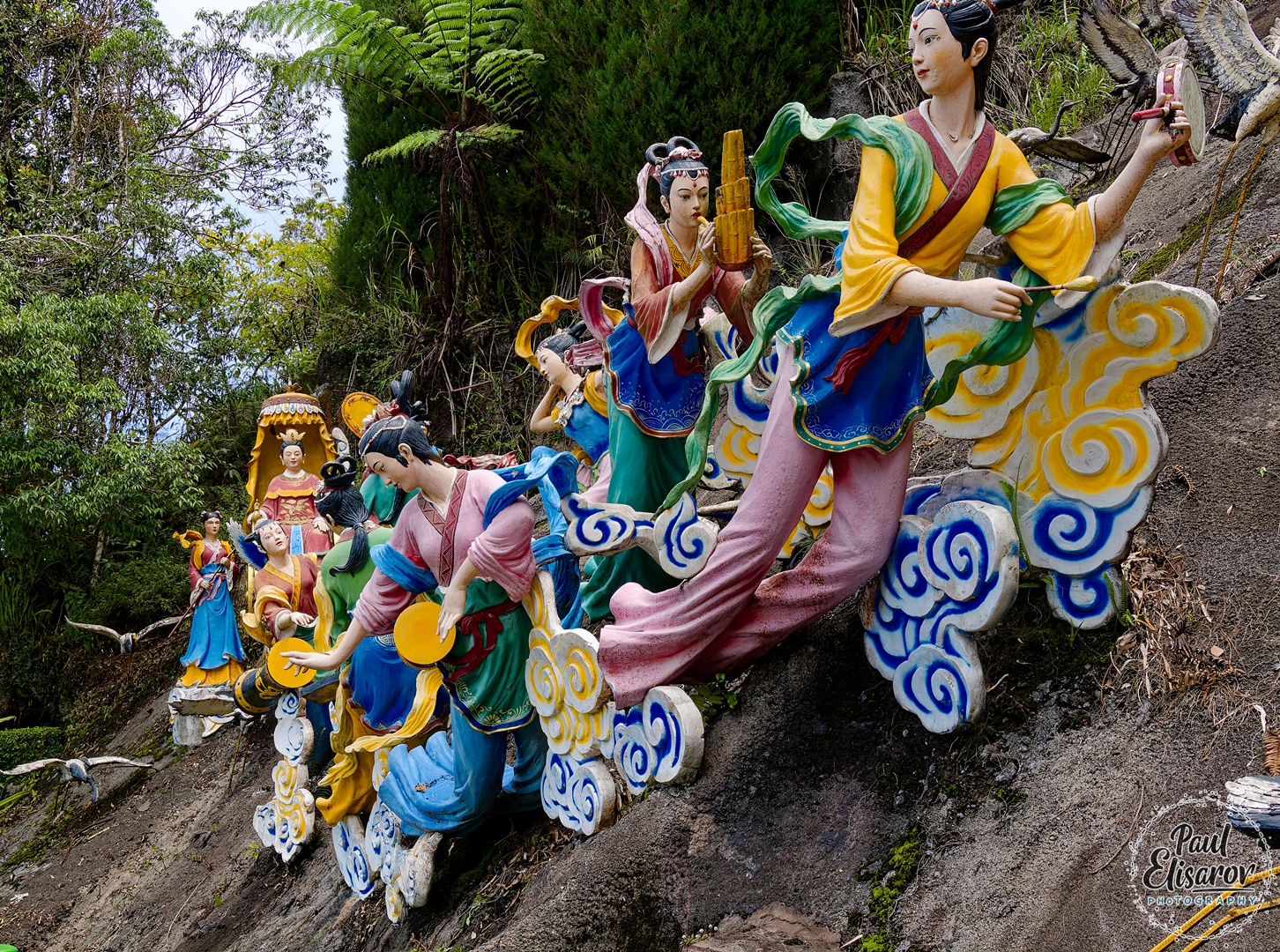
Then, emerging as if from a celestial pageant, came the heavenly carriage. The Queen Mother of the West — Xi Wangmu — descends in her majestic chariot, accompanied by a retinue of immortals and seven radiant fairies. She is the Taoist goddess of immortality, the keeper of the legendary peach garden whose fruits ripen only once every three thousand years and grant eternal life to all who taste them. The tableau is breathtaking: the fairies seem to float on clouds, their robes billowing in an invisible breeze, while the Queen Mother gazes outward with the serene authority of one who has witnessed eternity. I stood transfixed, trying to absorb every detail — the carved peach in her hand, the phoenix motif at the carriage’s prow. In the cosmology of this temple, she represents the ultimate promise: that beyond suffering, beyond judgment, beyond the torments of hell, lies a realm of beauty and eternal spring.
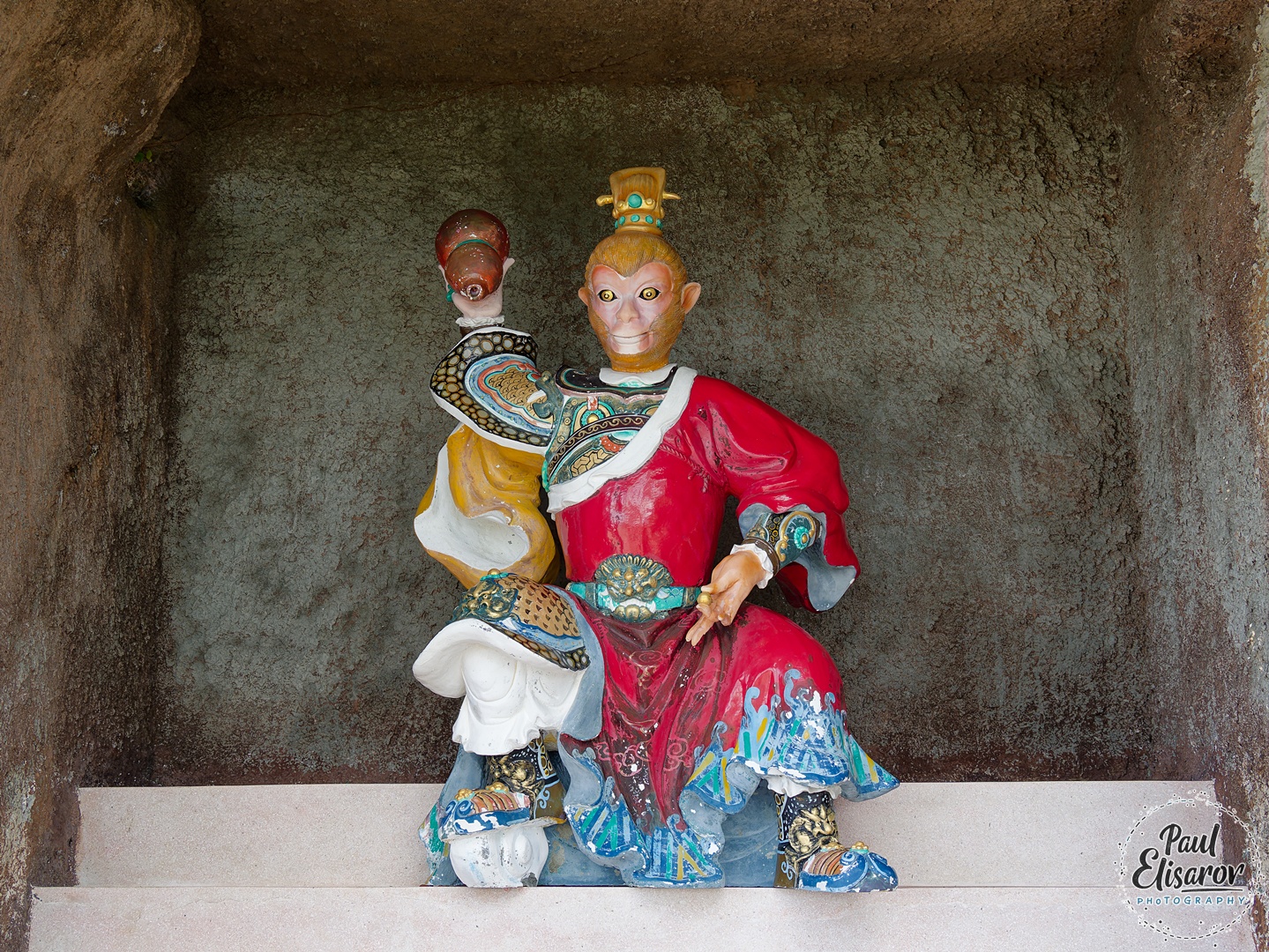
And then, just when I thought the Path had revealed all its wonders, I turned a corner and came face to face with the heroes of Journey to the West. There they were — the beloved characters of China’s greatest epic novel, frozen in mid-pilgrimage. The mischievous Monkey King, Sun Wukong, stands at the forefront, his expression cunning and defiant.
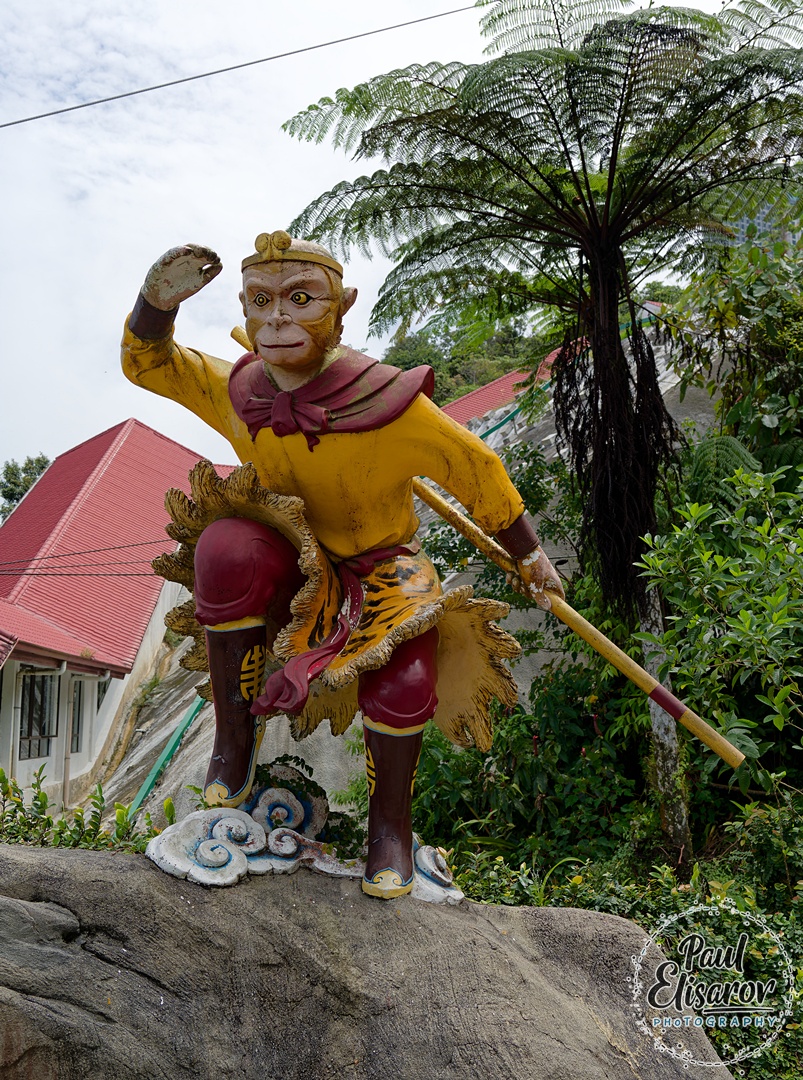
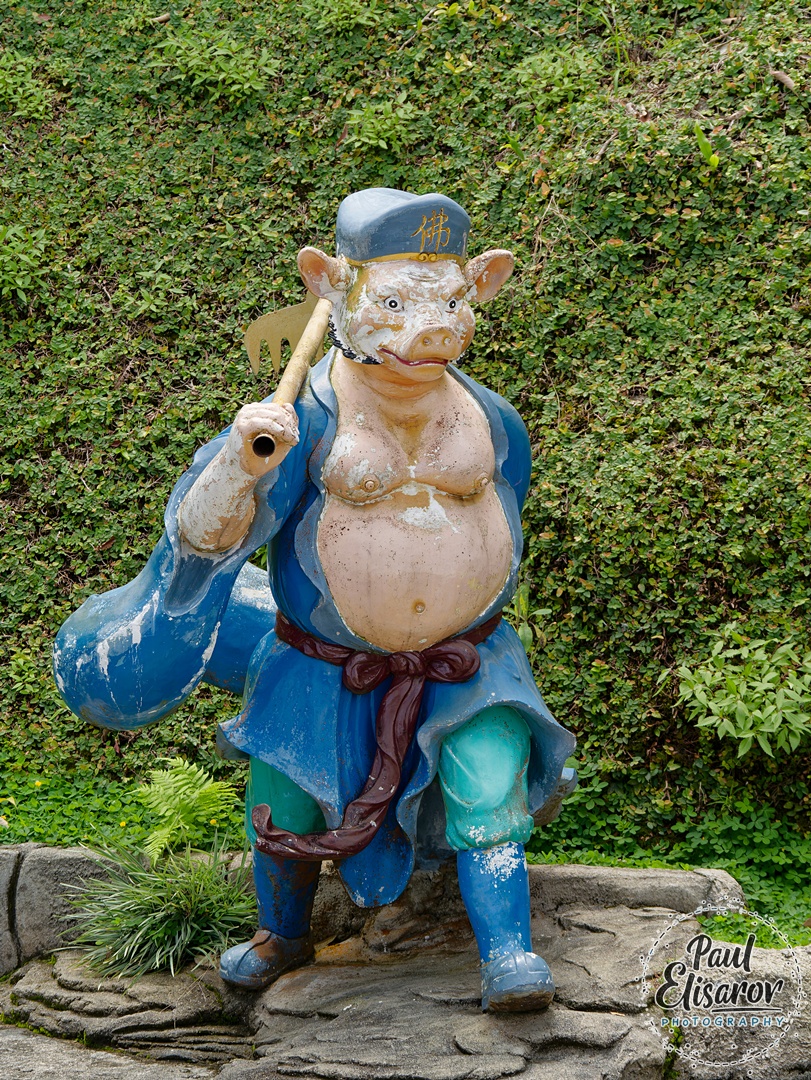
Beside him are Zhu Wuneng (Pigsy),
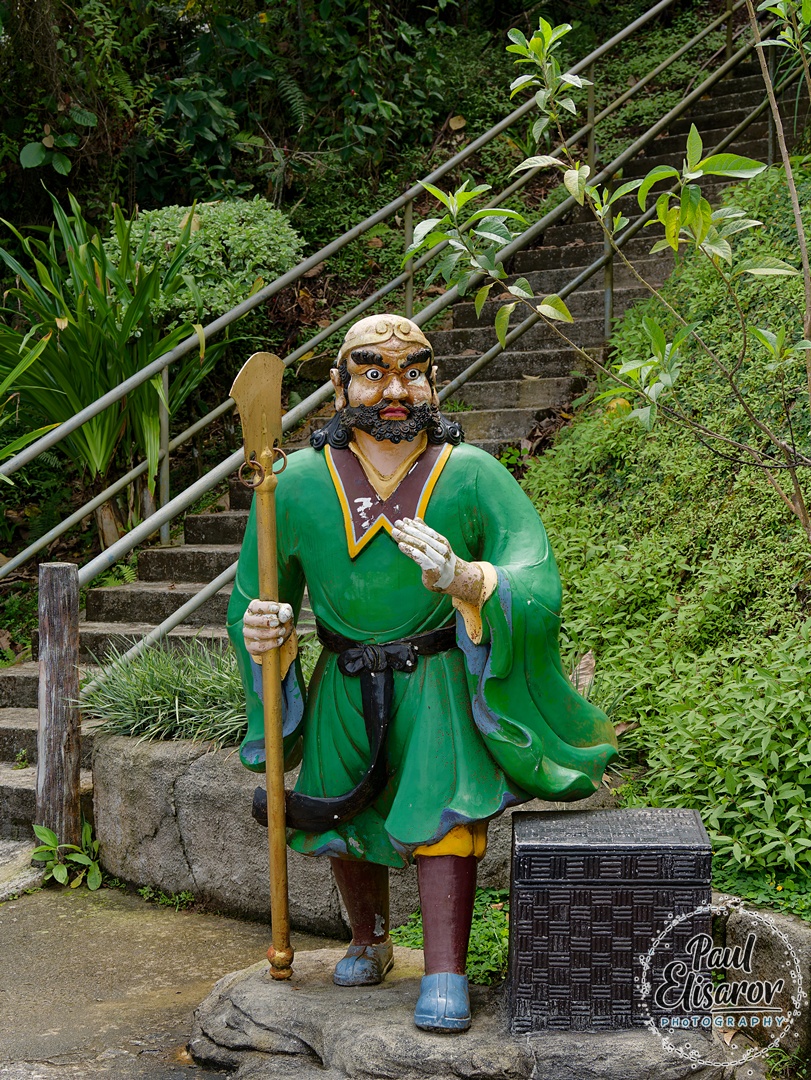
Sha Wujing (Sandy),
and the pious monk Xuanzang.
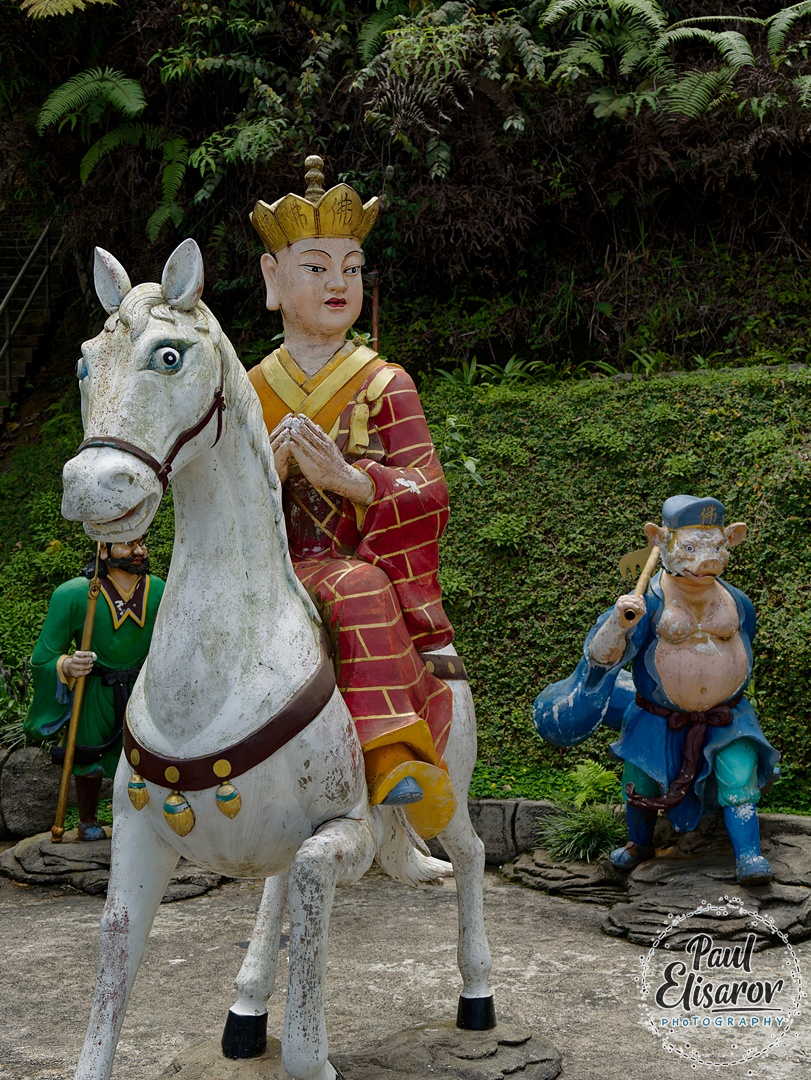
But it was the fourth companion that caught my eye — a white horse, standing faithfully carrying the monk. Few visitors realize that this is no ordinary steed. He is Bai Longma, the White Dragon Horse, and he was once a dragon prince — the third son of the Dragon King of the West Sea, no less. According to the tale, he accidentally destroyed a pearl gifted by the Jade Emperor and was condemned to death, only to be spared by Guanyin herself, who transformed him into a horse to serve as the monk’s mount on the journey to retrieve the sacred Buddhist sutras. Standing before this tableau, I felt the weight of centuries of storytelling pressing in around me — myth, faith, and folklore woven together into a single moment.
I lingered until the golden afternoon light began to soften, reluctant to leave this extraordinary place. Before catching the cable car back down, I wandered through the temple’s gift shop, browsing shelves lined with prayer beads, incense coils, and tiny jade amulets that tinkled softly when touched.
The aroma of non-halal cooking drifted from a small café tucked beside the square, and I sat for a while over a bowl of steaming noodles with fried bacon, the mountain breeze cool on my face. Other visitors sipped tea or enjoyed simple rice dishes, their conversations hushed and contented. It struck me that this, too, was part of the experience — not the grand statues or the dramatic hellscapes, but the quiet ordinariness of a meal shared in a sacred place, the small human moments that stitch a journey together.
As my gondola pulled away from the station, I watched the pagoda grow smaller and smaller, until it was just a crimson flicker in a vast green sea — already planning my return.
👁
452 views